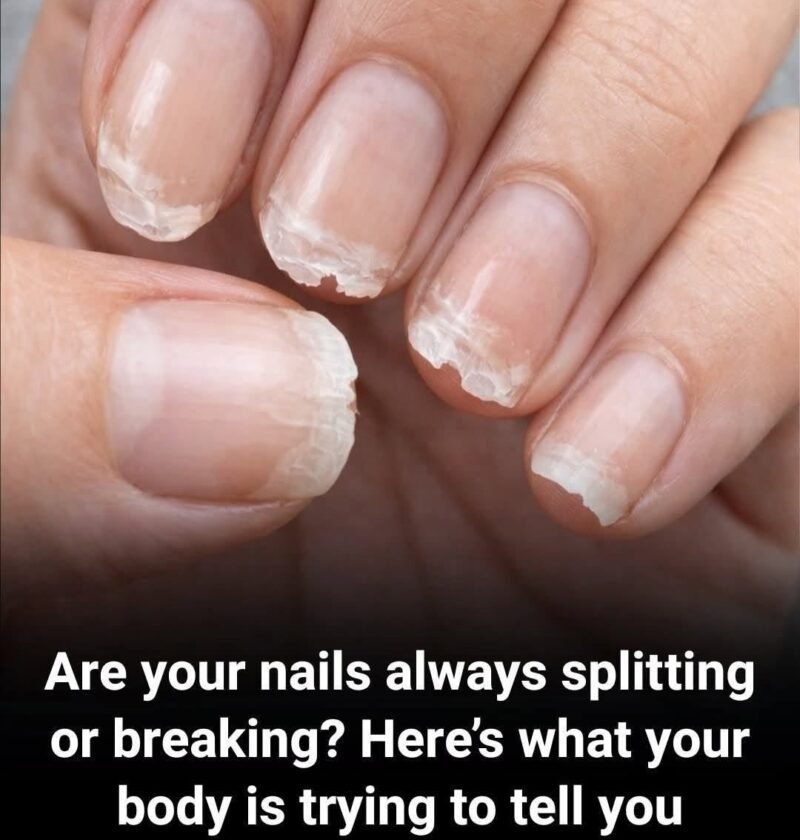
Nails are made primarily of **keratin**, a hardened protein that relies on adequate hydration, circulation, and nutrient supply to remain strong and flexible. When nails become brittle, split, or peel, it is often a signal from your body indicating either external stress or an underlying internal imbalance.
—
## 1. Dry Brittle vs. Soft Brittle Nails
Before looking at causes, it helps to distinguish between the two primary ways nails weaken:
* **Dry Brittle (Onychoschizia):** Nails are hard, dry, and crack or split easily. This usually points to environmental moisture loss or age-related changes.
* **Soft & Peeling Brittle (Onychorrhexis):** Nails bend easily, feel thin, or peel in layers. This frequently points to excess moisture exposure, nutrient deficiencies, or systemic factors.
—
## 2. Common Internal Signals (What Your Body May Be Saying)
### Nutritional Deficiencies
* **Iron Deficiency (Anemia):** Iron helps carry oxygen to your cells, including your nail matrix. Low iron can cause soft, brittle nails, vertical ridges, or spoon-shaped curves (**koilonychia**).
* **Biotin (Vitamin B7):** Essential for keratin production. Low levels can lead to thin, easily fragmented nails.
* **Zinc & Magnesium:** Essential for protein synthesis and tissue building. Deficiencies can cause white spots, slow growth, or structural weakness.
* **Protein Deficits:** Since keratin is a protein, inadequate dietary protein directly impacts nail thickness and strength.
### Thyroid Function
* **Hypothyroidism (Underactive Thyroid):** A slow thyroid reduces cell metabolism and sweat production, leading to dry skin, cold sensitivity, fatigue, and dry, brittle nails that split easily.
* **Hyperthyroidism (Overactive Thyroid):** Can cause nails to lift away from the nail bed (**onycholysis**) or grow unusually fast and soft.
### Circulation & Aging
* **Reduced Peripheral Blood Flow:** Conditions like Raynaud’s phenomenon or poor circulation reduce blood and oxygen delivery to the fingertips.
* **Natural Aging:** As we grow older, natural oil and moisture levels in the nail plate decline, making nails drier and more prone to vertical ridges.
—
## 3. External Causes (Environmental Stressors)
Often, brittle nails stem from simple physical or chemical habits rather than medical issues:
* **Frequent Handwashing & Water Exposure:** Soaking nails in water causes the nail plate to expand; drying causes it to shrink. Repeated expansion and contraction weaken intercellular bonds, leading to peeling.
* **Harsh Chemicals & Solvents:** Frequent use of acetone-based polish removers, household cleaning detergents, or hand sanitizers strips the natural oils from the nail plate.
* **Gel & Acrylic Manicures:** Aggressive scraping during removal thins the protective outer layers of the nail.
—
## 4. Key Takeaways & When to See a Doctor
| Symptom Pattern | Common Cause | Recommended Action |
| — | — | — |
| **Dry, splitting tips** | Dehydration, harsh soaps, low moisture | Apply cuticle oil daily; wear gloves for chores |
| **Soft, peeling layers** | Water overexposure, low iron/biotin | Limit soaking; evaluate iron and protein intake |
| **Brittle + fatigue + cold intolerance** | Possible thyroid imbalance | Consult a doctor for a thyroid panel (TSH) |
| **Spoon-shaped or concave nails** | Iron deficiency / Anemia | Seek blood tests (ferritin, CBC) |
> **When to seek medical advice:** If nail brittleness persists despite moisturizing, or if it is accompanied by systemic symptoms (unexplained weight changes, severe fatigue, hair loss, or skin color changes), consult a healthcare provider for routine blood work.