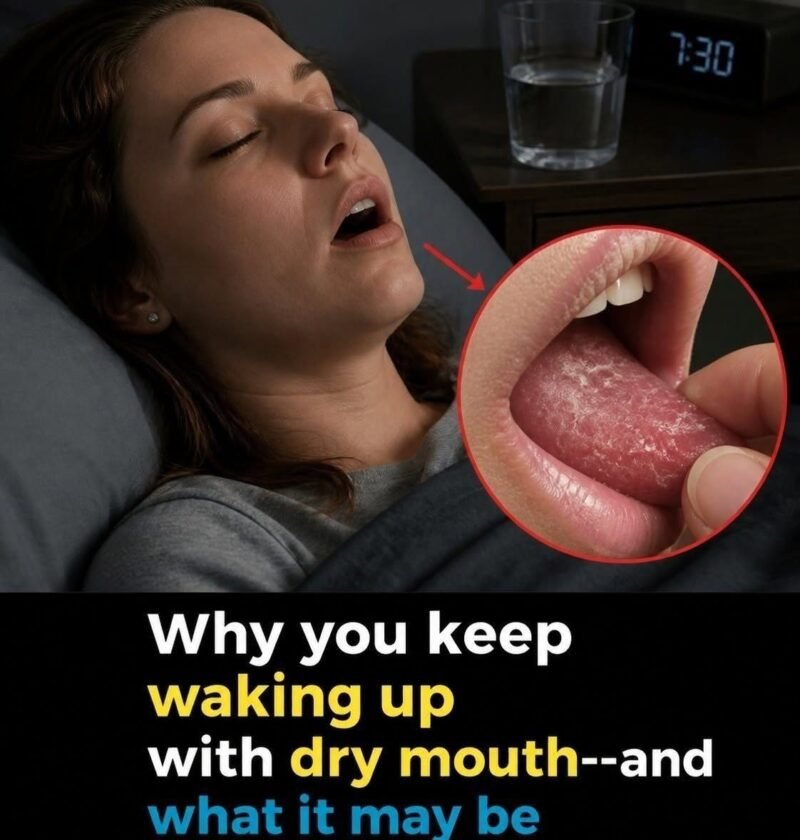
Waking up with a parched, sticky mouth or a scratchy throat is a surprisingly common experience. While it is normal for your body to slow down saliva production while you sleep, waking up feeling like a desert usually means something is disrupting your overnight moisture balance.
Your body could be signaling several potential causes:
1. You’re Breathing Through Your Mouth
This is the most frequent culprit behind morning dry mouth. When you sleep with your mouth open—whether due to habit, nasal congestion from allergies, a deviated septum, or sinus issues—air constantly flows over your oral tissues, evaporating what little saliva your body is producing.
-
The Sleep Apnea Connection: Persistent mouth breathing and snoring at night can also be linked to obstructive sleep apnea (OSA), a condition where breathing repeatedly stops and starts throughout the night. If you also experience morning headaches, daytime fatigue, or gasping sounds during sleep, it’s worth mentioning to a doctor.
2. Mild Dehydration or Evening Habits
Going 7 to 8 hours without fluids naturally tests your hydration levels, but certain evening routines can amplify it:
-
Alcohol and Caffeine: Having a glass of wine, a cocktail, or caffeinated coffee/tea too late in the day acts as a diuretic, pulling water from your system and disrupting sleep quality.
-
Not Enough Water During the Day: If you’re chronically under-hydrated, your salivary glands simply won’t have the reserves to keep things moist overnight.
3. Medication Side Effects
Hundreds of prescription and over-the-counter medications list dry mouth (xerostomia) as a primary side effect. The most common offenders include:
-
Antihistamines and decongestants
-
Antidepressants and anti-anxiety medications
-
High blood pressure medications (antihypertensives)
-
Muscle relaxants
4. Environmental Dryness
Your bedroom climate plays a massive role. Sleeping in a room with a heater cranked up in the winter, aggressive air conditioning in the summer, or running a ceiling fan directly on your face will rapidly strip moisture from the air and dry out your airways.
5. Underlying Health Factors
In some cases, chronic morning dry mouth can point to internal shifts, such as:
-
Blood sugar fluctuations: Unmanaged or high blood sugar (often associated with diabetes) frequently triggers dry mouth and increased thirst.
-
Autoimmune conditions: Conditions like Sjögren’s syndrome specifically target moisture-producing glands.
Simple Ways to Find Relief
If your dry mouth is an occasional annoyance, a few tweaks can make a big difference:
-
Run a humidifier: Place a cool-mist humidifier in your bedroom to add ambient moisture back into the air.
-
Keep water close: Leave a glass or a bedside water bottle within arm’s reach for overnight sips.
-
Breathe through your nose: Address lingering nasal congestion with saline rinses or strips before bed if you tend to stuff up.
-
Protect your teeth: Because saliva acts as your mouth’s natural defense against bacteria, chronic dry mouth can increase your risk of cavities. Be diligent about brushing, flossing, and using an alcohol-free, hydrating mouthwash.
Note: If morning dry mouth is persistent, severely impacting your sleep, or accompanied by difficulty swallowing or dental changes, it’s a good idea to consult your primary care doctor, dentist, or an ear, nose, and throat (ENT) specialist to rule out underlying issues.
Are you experiencing any other symptoms along with the dry mouth, like daytime fatigue or nasal congestion?