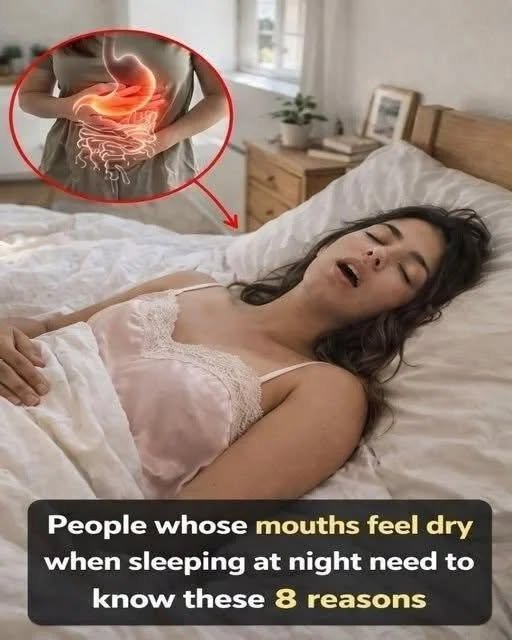
Viral health articles and sleep-wellness blogs love to present lists of “8 common reasons you’re waking up with a dry mouth”—ranging from simple mouth-breathing to obscure vitamin deficiencies or environmental triggers.
While waking up with a parched, sticky mouth (medically known as xerostomia) is a very common and uncomfortable morning annoyance, the underlying causes are usually straightforward rather than mysterious.
Here is a look at what is actually happening physiologically when your mouth dries out overnight, separating the real culprits from internet exaggeration.
Why Mouth Dryness Happens Overnight
Your salivary glands naturally slow down their production of saliva while you sleep. When you combine this normal nighttime reduction in saliva with factors that dry out your oral mucosa, you wake up feeling like you swallowed dust.
Here are the most common, clinically recognized reasons for nighttime dry mouth:
-
Mouth Breathing (Nasal Congestion or Sleep Habits):
-
Why it happens: If you breathe through your mouth rather than your nose overnight—often due to a deviated septum, nasal allergies, sinus congestion, or sleep apnea—a continuous stream of air flows over your oral tissues, rapidly evaporating the thin layer of saliva protecting your mouth and teeth.
-
-
Medication Side Effects:
-
Why it happens: Hundreds of common prescription and over-the-counter medications (including antihistamines, decongestants, blood pressure medications, antidepressants, and muscle relaxants) list dry mouth as a primary anticholinergic side effect. They directly suppress salivary gland secretion.
-
-
Dehydration:
-
Why it happens: If your overall daily fluid intake is too low, or if you lose fluids through heavy sweating, caffeine consumption, or alcohol intake in the evening, your body prioritizes hydration for vital internal organs, reducing saliva production.
-
-
Aging and Natural Salivary Changes:
-
Why it happens: As we get older, salivary gland function naturally decreases slightly, and older adults are also more likely to take multiple medications that compound dry mouth symptoms.
-
-
Mouth-Related Habits (Snoring and Sleep Apnea):
-
Why it happens: Loud snoring forces your mouth open. Furthermore, untreated obstructive sleep apnea (OSA) is frequently accompanied by severe nighttime dry mouth due to chronic oral breathing and disrupted sleep architecture.
-
-
Evening Alcohol or Caffeine Consumption:
-
Why it happens: Both alcohol and caffeine act as diuretics and can dry out mucosal tissues, especially when consumed in the hours leading up to bedtime.
-
-
Dry Indoor Environment:
-
Why it happens: Sleeping in a bedroom with low humidity—particularly during winter months when indoor heating runs constantly—accelerates moisture evaporation from your airways and mouth.
-
-
Nerve Damage or Underlying Health Conditions:
-
Why it happens: Chronic conditions like Sjögren’s syndrome (an autoimmune disorder that attacks moisture-producing glands), diabetes, or nerve damage affecting the head and neck can significantly impair normal saliva flow.
-
Why Addressing Dry Mouth Matters
While it feels like a simple nuisance, saliva plays a vital protective role in your mouth. It neutralizes acids produced by bacteria, washes away food particles, and provides minerals to protect your tooth enamel.
When your mouth is chronically dry overnight, you face a much higher risk of:
-
Tooth decay and rapid cavities (especially along the gumline)
-
Gum inflammation (gingivitis) and oral infections like thrush
-
Difficulty swallowing, speaking, or wearing dental appliances comfortably
Simple Ways to Find Relief
If you regularly wake up parched, a few practical adjustments can help protect your oral health:
-
Use a Bedside Humidifier: Adding moisture to your bedroom air prevents your nasal passages and mouth from drying out as quickly overnight.
-
Breathe Through Your Nose: Address underlying congestion with saline rinses or strips, and consult an ENT if a chronic structural blockage forces you to mouth-breathe.
-
Stay Hydrated Throughout the Day: Sip water consistently rather than trying to chug a massive glass right before bed (which will only interrupt your sleep with trips to the bathroom).
-
Use Saliva Substitutes or Xylotriol Rinses: Over-the-counter moisturizing mouthwashes, sprays, or lozenges specifically formulated for dry mouth can help lubricate oral tissues overnight.
If persistent dry mouth doesn’t improve with simple adjustments—or if it is accompanied by severe fatigue, swollen salivary glands, or dry eyes—a visit to your dentist or doctor can help rule out underlying medical causes or medication interactions!