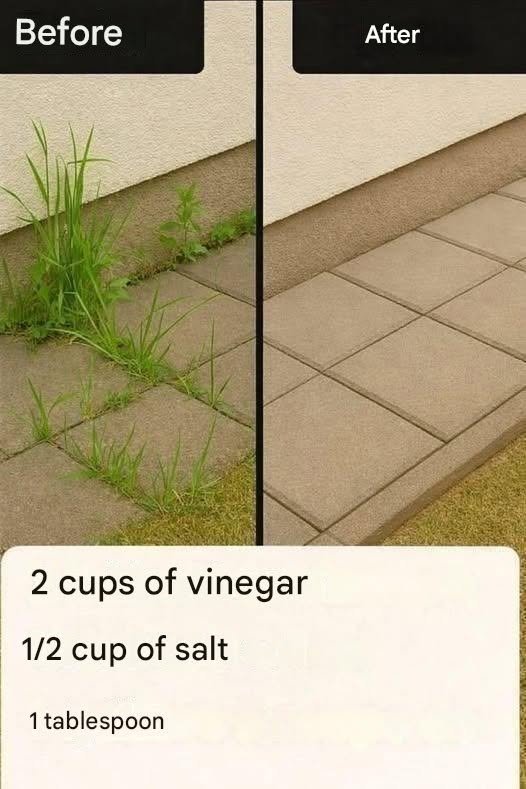
If weeds are taking over your garden paths, driveway cracks, patio or other unwanted areas, you may be tempted to reach for a commercial weed killer. But for small areas, there are several simple homemade approaches that can help control weeds.
The key is to choose a method appropriate for the location. A solution that kills weeds can also damage desirable plants, soil organisms and surrounding vegetation.
1. The Simplest Option: Boiling Water
For weeds growing between paving stones, along sidewalks or in driveway cracks, boiling water is one of the simplest options.
How to use it
- Boil a kettle or pot of water.
- Carefully carry it to the weed.
- Pour the hot water directly over the leaves and base of the plant.
- Avoid splashing nearby desirable plants.
- Repeat after several days if the weed regrows.
The heat damages the plant’s tissues. This method works best on young weeds and weeds growing in places where you don’t want anything else to grow.
Important: Boiling water can cause severe burns. Keep children and pets away while handling it.
2. Vinegar-Based Weed Control
Household vinegar contains acetic acid, which can damage the leaves of many small weeds.
A simple approach is to use ordinary household vinegar according to its label, rather than preparing increasingly concentrated acid mixtures.
Apply it directly to the foliage of weeds on a dry, calm day. Avoid spraying desirable plants.
What to know
Vinegar is primarily a foliar treatment. It can kill or severely damage the leaves it contacts, but established perennial weeds may regrow from their roots.
It is therefore more useful for small, young weeds than for deeply rooted plants.
Higher-concentration horticultural acetic-acid products can cause serious eye and skin injuries and should not be treated like ordinary kitchen vinegar.
3. Don’t Add Salt to Your Garden Soil
A popular homemade weed-killer recipe combines vinegar with salt. Although salt can make a mixture more damaging to plants, that doesn’t make it a good choice for most gardens.
Salt can remain in the soil and interfere with the growth of plants you actually want to keep.
For this reason, avoid salt-based weed killers in garden beds, lawns and areas where you may want plants to grow later.
If weeds are growing in a driveway crack or another location where vegetation is permanently unwanted, physical removal or repeated boiling-water treatment is generally a better approach.
4. Dish Soap: What Does It Actually Do?
You may see recipes recommending dish soap as a key ingredient.
Soap can help a liquid spread across a plant’s waxy leaf surface, but it isn’t the main weed-killing ingredient. Household detergents can also injure desirable plants.
There’s therefore little reason to create a complicated mixture when direct application of an appropriate weed-control method is sufficient.
5. For Long-Term Control, Remove the Roots
One of the biggest mistakes people make is treating only what they can see.
If a weed has an established root system, killing the leaves may provide only temporary results.
For persistent weeds:
- Pull or dig out the plant when the soil is moist.
- Remove as much of the root system as practical.
- Dispose of flowering or seed-producing weeds before they spread seeds.
- Apply mulch to bare soil to reduce new weed growth.
- Repeat removal when new shoots appear.
Repeatedly removing new growth can gradually weaken some perennial weeds.
6. Use Mulch as a Weed Preventer
The most effective homemade “herbicide” may be not allowing weeds to emerge in the first place.
A layer of organic mulch around established garden plants can block light and make it much harder for weed seeds to germinate.
Keep mulch away from direct contact with plant stems and trunks, and replenish it as it breaks down.
7. Protect the Plants You Want to Keep
Homemade weed treatments are generally non-selective. In other words, they don’t know the difference between a weed and your favorite flower.
Before applying anything:
- Identify the weed.
- Shield nearby desirable plants.
- Avoid windy conditions.
- Don’t spray when rain is expected.
- Don’t apply treatments to plants you intend to eat unless the product is specifically approved and labeled for that use.
- Follow all safety instructions on any commercial product you use.
The Best Method Depends on the Location
For patio or driveway cracks:
Boiling water and repeated physical removal are simple choices.
For garden beds:
Hand weeding and mulch are usually safer choices because you don’t want to damage the surrounding soil or plants.
For lawns:
Don’t use a homemade non-selective herbicide indiscriminately—it can kill the grass along with the weeds. A lawn-specific product or targeted mechanical removal is more appropriate.
For large areas or invasive perennial weeds:
A persistent weed may require repeated mechanical control or a properly labeled commercial herbicide. Follow the product’s directions carefully.
Final Takeaway
There isn’t one magical homemade herbicide that safely and permanently kills every weed.
For small areas, boiling water, careful hand removal and mulch can be surprisingly effective. Vinegar-based treatments may damage young weeds, but they can also harm desirable plants and generally aren’t a reliable solution for deep-rooted perennial weeds.
Most importantly, don’t assume that adding more ingredients makes a weed killer better. Salt can damage soil, concentrated acids can cause serious burns, and household chemicals can create unnecessary risks.
For the safest long-term approach, target the weed, remove its roots when possible, and prevent new weeds with mulch or other physical barriers.
If you want, I can also make this into a viral-style gardening article with “5 homemade recipes,” a catchy introduction, and step-by-step instructions.