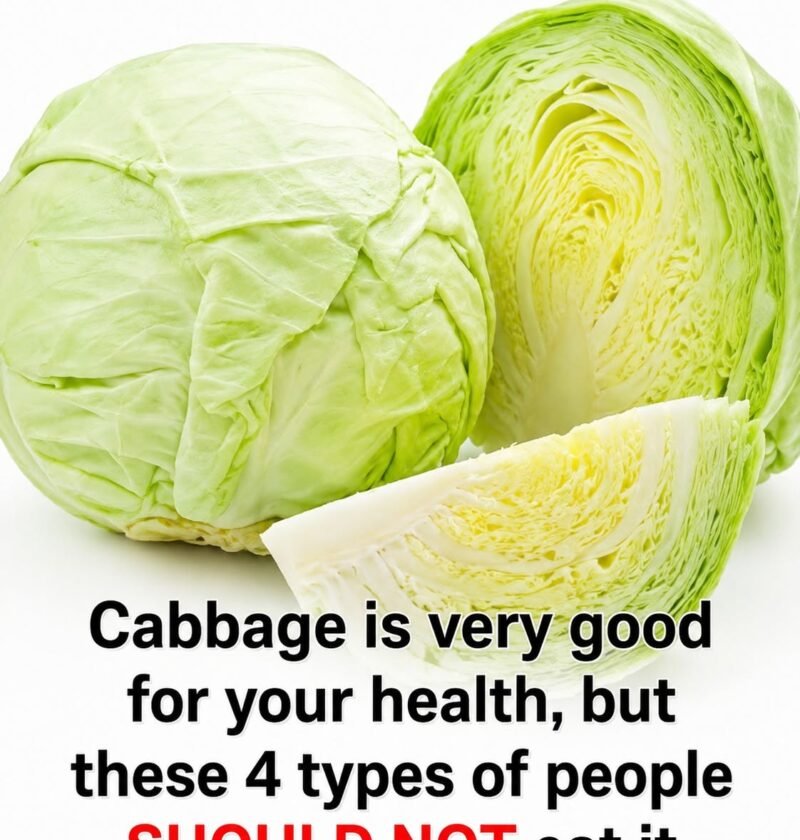
When health articles and viral videos use the teaser “4 types of people who should avoid eating cabbage,” they are setting up a classic clickbait premise. Because cruciferous vegetables like cabbage are universally praised as nutritional powerhouses, the idea that certain people must strictly avoid them creates an instant curiosity gap.
While cabbage is exceptionally healthy for the vast majority of people, clinical nutrition and gastroenterology do recognize a few specific physiological situations where raw or high-volume cabbage consumption requires caution or modification.
To separate internet hyperbole from nutritional reality, here are the groups of people who should approach cabbage with care, along with the science behind why:
1. Individuals with Hypothyroidism (Underactive Thyroid)
-
The Claim: Cabbage is a “goitrogen,” meaning it interferes with thyroid function and causes goiters.
-
The Clinical Reality: Cabbage contains compounds called goitrogens, which can interfere with the thyroid gland’s ability to absorb iodine if consumed in massive, raw quantities. However, unless you have a severe, untreated iodine deficiency or are eating raw cabbage by the head every single day, normal culinary amounts pose virtually no risk. Furthermore, cooking cabbage largely inactivates goitrogenic compounds, making it safe for most people with stable thyroid conditions.
2. People Suffering from Irritable Bowel Syndrome (IBS) or Chronic Bloating
-
The Claim: Cabbage destroys your gut and causes severe digestive distress.
-
The Clinical Reality: Cabbage is rich in FODMAPs (specifically fermentable oligosaccharides) and complex fibers. For individuals with sensitive digestive tracts, IBS, or small intestinal bacterial overgrowth (SIBO), these fibers are fermented rapidly by gut bacteria, producing excess gas, bloating, and abdominal pain. For this group, eating large portions of raw cabbage can be genuinely uncomfortable, though well-cooked cabbage or smaller portions are often better tolerated.
3. Patients Taking Blood-Thinning Medications (Like Warfarin)
-
The Claim: Cabbage interacts dangerously with your blood.
-
The Clinical Reality: Cabbage is exceptionally rich in Vitamin K, which plays a direct role in blood clotting. If you are taking anticoagulant medications like Warfarin (Coumadin), consistency is key. A sudden, massive increase in high-Vitamin K foods can counteract your medication. Doctors don’t tell patients on blood thinners to avoid cabbage entirely, but rather to keep their intake consistent from week to week so their medication dosage can be accurately calibrated.
4. Individuals Recovering from Abdominal Surgery or Experiencing Bowel Obstructions
-
The Claim: Cabbage is too tough for your stomach to handle.
-
The Clinical Reality: In the immediate post-operative phase of gastrointestinal surgery, or for patients with strictures or active bowel obstructions, raw, fibrous, cruciferous vegetables are too difficult to digest. They can form bulky residues that cause cramping or blockages in compromised digestive tracts until full healing has occurred.
The Bottom Line for Everyone Else
If you don’t fall into one of these specific medical categories, cabbage is an incredible addition to your diet. It is packed with Vitamin C, Vitamin K, fiber, and powerful sulfur-containing compounds (glucosinolates) that support cellular health and reduce inflammation—whether you enjoy it shredded in slaws, fermented into kimchi or sauerkraut, or roasted in wedges.
Are you looking into cabbage for a specific dietary plan, or were you trying to navigate a digestive sensitivity?