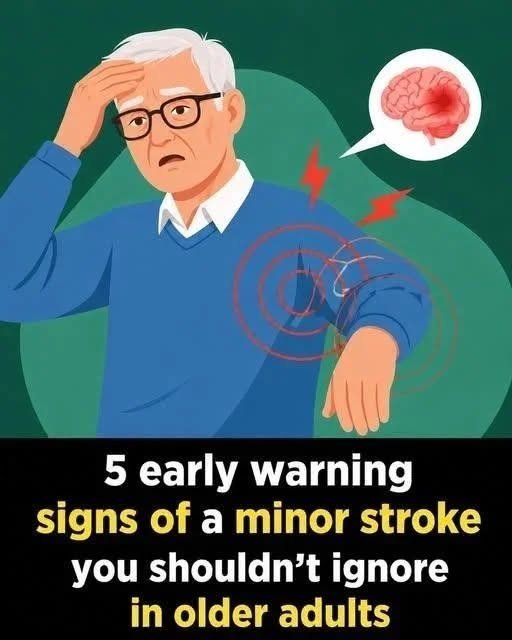
Viral health articles and senior-care blogs love to use urgent, clickbait headlines like “5 Symptoms of a Mini Stroke in Seniors That Shouldn’t Be Ignored” to drive anxiety.
While a transient ischemic attack (TIA)—commonly known as a mini stroke—is a genuine medical emergency that requires immediate evaluation, it doesn’t manifest as five quirky, obscure signs. Instead, true mini strokes present with sudden, classic neurological deficits that mirror a full stroke, though they typically resolve quickly (often within minutes to an hour) without permanent damage.
However, because a TIA is often a major warning sign of an impending major stroke, recognizing the true clinical symptoms is critical.
The Reality: What a TIA Actually Looks Like
Medical professionals rely on the internationally recognized FAST framework to identify the sudden neurological signs of both strokes and mini strokes:
-
Face Drooping (F):
-
What happens: One side of the face suddenly droops or feels numb. If the person tries to smile, the smile is uneven.
-
-
Arm Weakness (A):
-
What happens: Sudden weakness or numbness in one arm. If the person tries to raise both arms, one drifts downward or cannot be kept elevated.
-
-
Speech Difficulty (S):
-
What happens: Sudden slurred speech, difficulty speaking, or trouble understanding simple sentences. The person may sound confused or struggle to get words out.
-
-
Time to Call Emergency Services (T):
-
What happens: Because there is no way to tell in the moment whether a sudden neurological episode is a temporary TIA or a full, irreversible stroke, time is critical.
-
Other Sudden Signs of a Mini Stroke
Beyond the core FAST signs, a TIA can cause other sudden, neurological disruptions depending on which part of the brain experiences a temporary blockage in blood flow:
-
Sudden Vision Changes: Sudden blurring, double vision, or sudden loss of vision in one or both eyes.
-
Sudden Loss of Balance or Coordination: Unexplained dizziness, severe loss of balance, or sudden difficulty walking, often accompanied by vertigo.
-
Sudden Severe Headache: An abrupt, unusually intense headache with no known cause.
Why a “Mini” Stroke Is Never Minor
A common misconception is that because the symptoms of a TIA disappear quickly, the event wasn’t serious. In reality, a TIA is a medical warning shot.
-
The Staging Ground for Major Strokes: Research shows that roughly 10% to 15% of people who experience a TIA will suffer a major stroke within three months, with the highest risk concentrated in the first few days following the initial episode.
-
Immediate Evaluation Needed: Anyone experiencing sudden stroke-like symptoms—even if they resolve entirely within 10 minutes—must be evaluated in an emergency room immediately. Diagnostic tests like an MRI, CT scan, and carotid ultrasound are necessary to identify the underlying cause (such as high blood pressure, atrial fibrillation, or blocked arteries) and initiate preventative care.