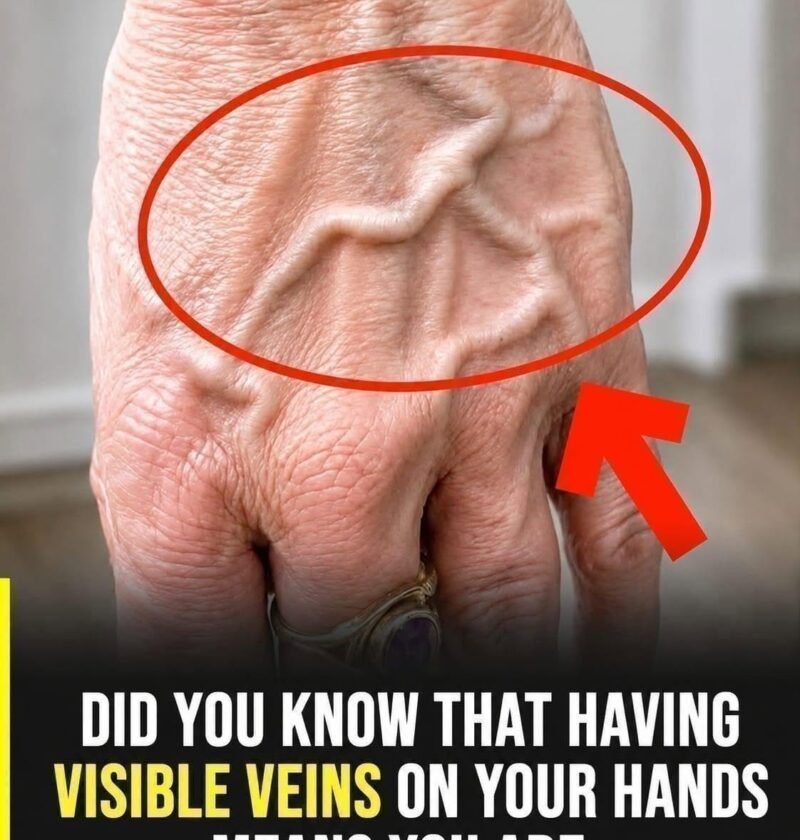
Noticing prominent or visible veins can be a cause for curiosity—or concern. While many people see veins more clearly due to completely harmless, everyday factors, other times prominent veins can be a sign that your circulatory system is working overtime.
1. Normal and Harmless Causes of Visible Veins
In the vast majority of cases, visible veins are simply a normal physical trait rather than a medical problem. Common non-medical reasons include:
-
Low Body Fat and High Muscle Mass: When you have a lower percentage of subcutaneous fat (the fat layer just under the skin) or well-developed muscles from exercise, your superficial veins are pushed closer to the surface, making them look more prominent.
-
Genetics and Fair Skin: Natural skin tone and inherited family traits play a major role. People with fair skin often have veins that naturally show through more vividly, and vascular patterns frequently run in families.
-
Natural Aging: As we get older, our skin naturally thins and loses collagen and elasticity, making underlying structures like veins more noticeable.
-
Temporary Expansion (Heat and Exercise): When you work out or when the weather is hot, your body sends more blood to the skin’s surface to cool you down, causing veins to dilate (temporarily widen).
2. When Visible Veins Indicate an Underlying Health Issue
Sometimes, visible veins—particularly when they are bulging, twisted, or rope-like—signal a medical condition involving circulation.
-
Varicose Veins: These occur when the tiny one-way valves inside your leg veins weaken or fail. Instead of pushing blood smoothly back up to the heart against gravity, blood pools inside the vein, causing it to stretch, bulge, and twist.
-
Chronic Venous Insufficiency (CVI): A longer-term condition where the venous system struggles to return blood efficiently from the lower extremities, often leading to swelling, skin changes, and prominent superficial veins.
-
Hormonal Shifts: Fluctuations during pregnancy, menopause, or from hormone therapies can alter vein elasticity and blood volume, frequently unmasking new surface veins.
3. Health Risks and Complications
While mild varicose or spider veins are often just a cosmetic annoyance, ignoring chronic circulation issues over time can lead to complications, such as:
-
Aching and Discomfort: Heavy, throbbing, or fatigued legs, particularly after standing or sitting for long periods.
-
Skin Changes and Ulcers: Chronic pooling of blood can cause inflammation, darkening of the skin, or stubborn, slow-healing sores (venous ulcers) near the ankles.
-
Superficial Blood Clots (Thrombophlebitis): Blood clots can sometimes form in surface veins, causing localized pain, hardness, and redness.
4. When to See a Doctor Immediately (Red Flags)
While routine visible veins can usually wait for a standard check-up, certain symptoms require prompt or emergency medical evaluation to rule out dangerous conditions like Deep Vein Thrombosis (DVT)—a blood clot in a deep vein that can travel to the lungs:
-
A vein that feels hard, warm to the touch, or severely tender/painful
-
Sudden, unexplained swelling, pain, or redness in one leg
-
Skin ulcers, open sores, or rapid skin discoloration near the veins
-
A vein that suddenly begins bleeding
-
Shortness of breath or chest pain accompanying leg symptoms (which requires emergency care)
Are your visible veins accompanied by any physical discomfort like aching or swelling, or are you noticing them change in a specific area of your body?