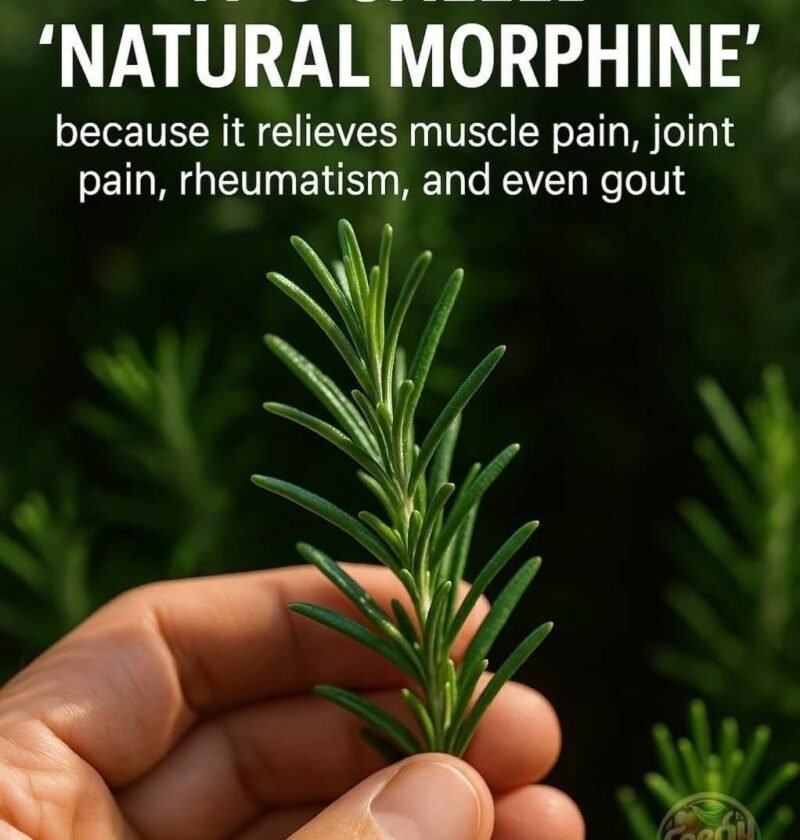
Rosemary is not “natural morphine”
The phrase “natural morphine in your own home” is misleading. Rosemary is a culinary herb with potentially useful compounds, but it does not contain morphine and isn’t a natural substitute for prescription opioid pain medicines.
What rosemary may actually do
Rosemary contains compounds such as rosmarinic acid and carnosic acid. Research has investigated rosemary and rosemary extracts for antioxidant, anti-inflammatory, and other biological effects.
There is also some research into rosemary aroma or topical preparations and pain, but the evidence is limited and doesn’t establish rosemary as a reliable painkiller comparable to morphine.
Can rosemary help with pain?
Possibly modestly in some circumstances, but the evidence is not strong enough to treat significant or persistent pain with rosemary alone.
For example, using rosemary as a food seasoning is generally very different from consuming concentrated rosemary oil or extracts.
⚠️ Don’t ingest rosemary essential oil
Essential oils are highly concentrated and should not be swallowed casually. They can cause poisoning and other adverse effects. Applying concentrated essential oils directly to the skin can also cause irritation or allergic reactions.
If you’re taking medication, are pregnant, or have a medical condition, concentrated herbal products deserve particular caution because they can interact with medicines.
Bottom line
🌿 Rosemary = nutritious culinary herb with interesting biological compounds.
💊 Rosemary ≠ morphine and cannot replace prescribed pain medication.
If you’re looking for a natural approach to a particular type of pain—such as arthritis, back pain, headaches, or nerve pain—tell me what kind, and I can explain which approaches have the best evidence and which viral remedies are worth avoiding.