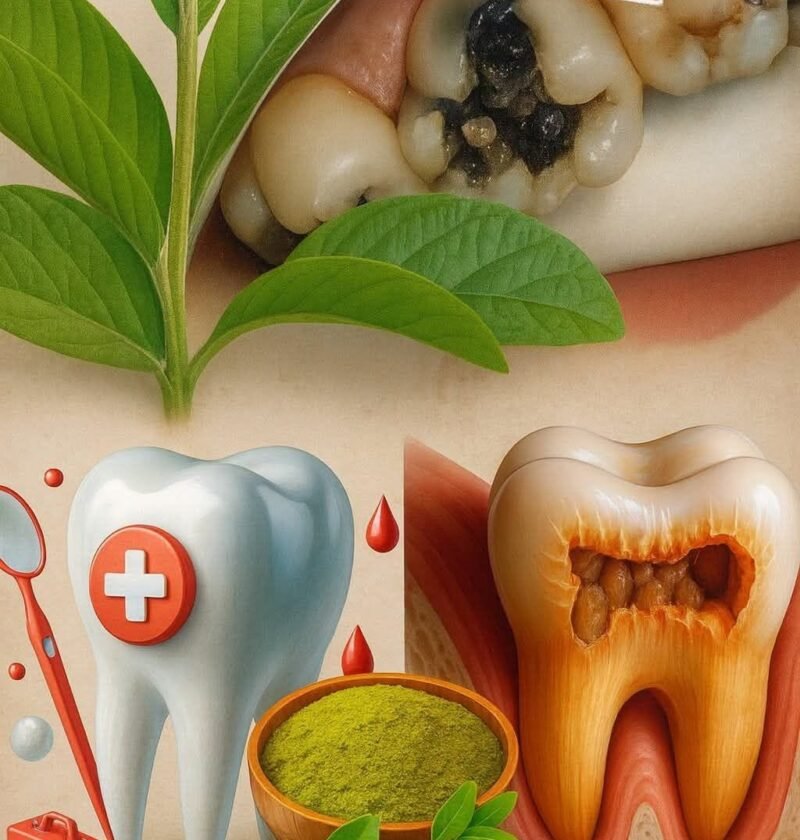
…clickbait health and dental headlines love to use miraculous, exaggerated hooks like “Top 3 ways to cure and reverse advanced tooth decay at home using guava leaves!” to make you think you can skip the dentist and heal cavities with a handful of foliage.
While dental hygiene and natural remedies are great supportive tools, the unvarnished dental reality is much more grounded: once enamel has physically eroded and a cavity (tooth decay) has formed, the tooth structure cannot regenerate itself. Chewing on guava leaves will not fill a cavity.
However, traditional plant remedies often hold a grain of scientific truth. Guava leaves (Psidium guajava) are packed with bioactive compounds, and while they won’t replace a dental drill, they do have legitimate, science-backed properties that support oral health.
Let’s look at what science says about guava leaves and what you actually need to do when dealing with tooth decay.
The Reality Behind Guava Leaves and Oral Health
In traditional medicine across parts of Asia and South America, guava leaves have long been used as a natural mouth rinse or chewed to soothe dental discomfort. Here is what science says about their chemical makeup:
1. Potent Anti-Inflammatory and Analgesic Properties
-
The science: Guava leaves are rich in flavonoids, tannins, and essential oils (like quercetin). These compounds possess natural anti-inflammatory and pain-relieving properties. If your gums are slightly swollen or irritated around a sensitive tooth, using a guava leaf decoction as a mouthwash can temporarily soothe local gum inflammation and discomfort.
2. Antimicrobial Action Against Plaque Bacteria
-
The science: Laboratory studies show that extracts from guava leaves exhibit antibacterial activity against common oral pathogens, including Streptococcus mutans—the primary bacteria responsible for producing the acids that eat away at tooth enamel.
-
The limit: While an antibacterial rinse can help reduce overall plaque bacteria in your saliva, it cannot penetrate an established cavity or eliminate bacteria burrowed deep inside tooth dentin.
Can You “Treat” Tooth Decay Naturally?
To understand why natural remedies cannot cure cavities, it helps to look at how tooth decay progresses:
-
The Enamel Stage (Reversible): In the very earliest stage of decay—before a physical hole forms—minerals can be leached out of the enamel (demineralization). Fluoride, good saliva flow, and proper hygiene can help remineralize this weak spot.
-
The Cavity Stage (Irreversible): Once the bacteria break through the outer enamel and create a physical cavity in the dentin, the tooth structure is permanently damaged. There are no blood vessels inside tooth enamel to deliver healing nutrients, and leaves cannot rebuild missing calcium and phosphate. Leaving a cavity untreated allows bacteria to tunnel deeper toward the nerve, leading to severe infections, abscesses, and tooth loss.
What to Do If You Suspect Tooth Decay
If you are experiencing tooth sensitivity, visible dark spots, or pain when chewing, skip the DIY leaf treatments and take these proven steps:
-
See a Dentist: A professional filling is the only way to stop a cavity from spreading. Modern dental fillings seal out bacteria and save the tooth.
-
Support Your Daily Hygiene: Brush twice a day with a fluoride toothpaste, floss daily to remove interdental plaque, and limit frequent sugary snacks that feed decay-causing bacteria.
The Bottom Line
Enjoy traditional herbal rinses for soothing irritated gums, but never rely on kitchen or garden hacks to treat a true cavity. Your teeth require professional dental care to stay healthy for a lifetime.