9 foot symptoms you shouldn’t ignore
Most foot problems are minor, but certain symptoms can signal nerve, circulation, infection, diabetes-related complications, or a significant injury. nhs.uk+1
-
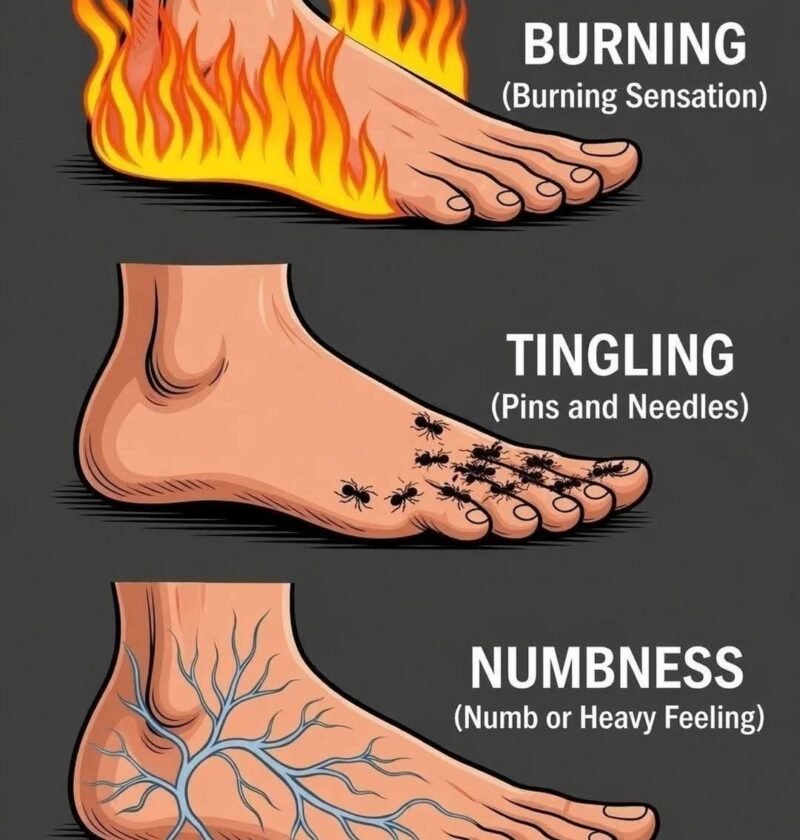
Persistent numbness or tingling — can indicate peripheral neuropathy, diabetes, a trapped nerve, or nutritional/other medical problems. nhs.uk+1
-
A sudden inability to move the foot — particularly foot drop or new weakness, which can indicate nerve problems. nhs.uk
-
Sudden or unexplained swelling in one foot or leg — requires medical assessment, particularly if painful or severe. nhs.uk
-
A hot, red, swollen foot — can occur with infection or inflammatory conditions such as gout. nhs.uk+1
-
A wound or ulcer that isn’t healing — especially important if you have diabetes, because reduced sensation can allow serious foot injuries to go unnoticed. nhs.uk
-
Severe or rapidly worsening pain — particularly after an injury, when accompanied by swelling or inability to walk, may indicate a fracture or other significant injury. nhs.uk
-
A major change in foot color or temperature — especially if sudden, painful, or associated with numbness, can warrant prompt evaluation for circulation problems.
-
Repeated burning or shooting pain — can be a sign of nerve irritation or peripheral neuropathy. nhs.uk
-
Persistent swelling of both feet or ankles — can sometimes be related to medications, vein problems, or heart, kidney, or liver conditions. nhs.uk
🚨 Don’t wait for these symptoms
If a foot or leg suddenly becomes very swollen, painful, hot/red, or you develop shortness of breath or chest pain, seek urgent medical attention. A blood clot or other serious problem needs to be ruled out. nhs.uk
And if you have diabetes, even apparently minor foot problems deserve extra attention. nhs.uk+1
The key is not to assume that a particular foot symptom automatically means a vitamin deficiency or another specific disease—the same symptom can have several causes.