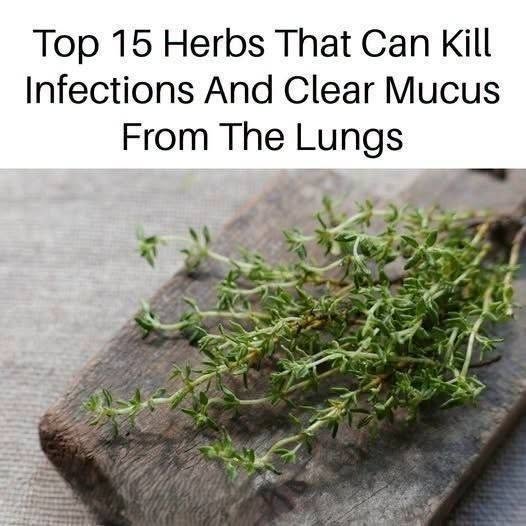
The headline is too strong medically. There isn’t good evidence that 15 herbs can “kill infections” in the lungs or literally clear mucus from the lungs. Some herbal preparations may modestly relieve cough or cold symptoms, but they shouldn’t replace treatment for pneumonia, bacterial infections, asthma, or other lung conditions.
N
NCCIH
+1
Herbs and natural products with some evidence
Thyme — Some evidence suggests thyme-containing preparations may reduce acute cough, although the evidence quality is limited.
N
Nice
Ivy leaf — Ivy preparations have been studied for acute cough and may provide symptomatic relief; evidence remains limited.
N
Nice
Pelargonium (South African geranium) — Some studies suggest it may improve symptoms of acute respiratory infections or bronchitis, but the evidence isn’t strong enough to call it an infection cure.
N
NCCIH
+1
Andrographis — Some trials suggest reduced cough severity or frequency, but the evidence quality ranges from low to very low and safety information is limited.
N
Nice
Echinacea — Research on respiratory infections is mixed; it shouldn’t be presented as a proven treatment.
N
NCCIH
Elderberry — Preliminary research suggests possible relief of cold or flu symptoms, but high-quality evidence remains insufficient.
N
NCCIH
Garlic — Despite laboratory evidence of antimicrobial activity, there isn’t strong clinical evidence that garlic treats respiratory infections.
N
NCCIH
+1
Other commonly promoted products—such as oregano oil, eucalyptus essential oil, ginger, turmeric, peppermint and licorice—may have traditional or laboratory uses, but that isn’t equivalent to demonstrating that they eliminate a lung infection in humans.
What actually helps loosen mucus?
For uncomplicated respiratory infections, adequate fluids, humidified air, warm drinks and honey for appropriate ages can help relieve cough and throat irritation. They don’t “kill” the infection, but they can make symptoms easier to manage.
N
Nice
And don’t inhale concentrated essential oils or put them directly into a nebulizer unless a qualified clinician specifically recommends a medically appropriate product. “Natural” does not automatically mean safe.
When mucus needs medical attention
Get medical evaluation for shortness of breath, chest pain, coughing up blood, confusion, bluish lips, high or persistent fever, or symptoms that are worsening rather than improving. Those symptoms can indicate a more serious respiratory illness.
A more accurate headline would be:
“7 Herbs Studied for Cough and Respiratory Symptoms—and What the Evidence Really Shows”.
N
N
Sources