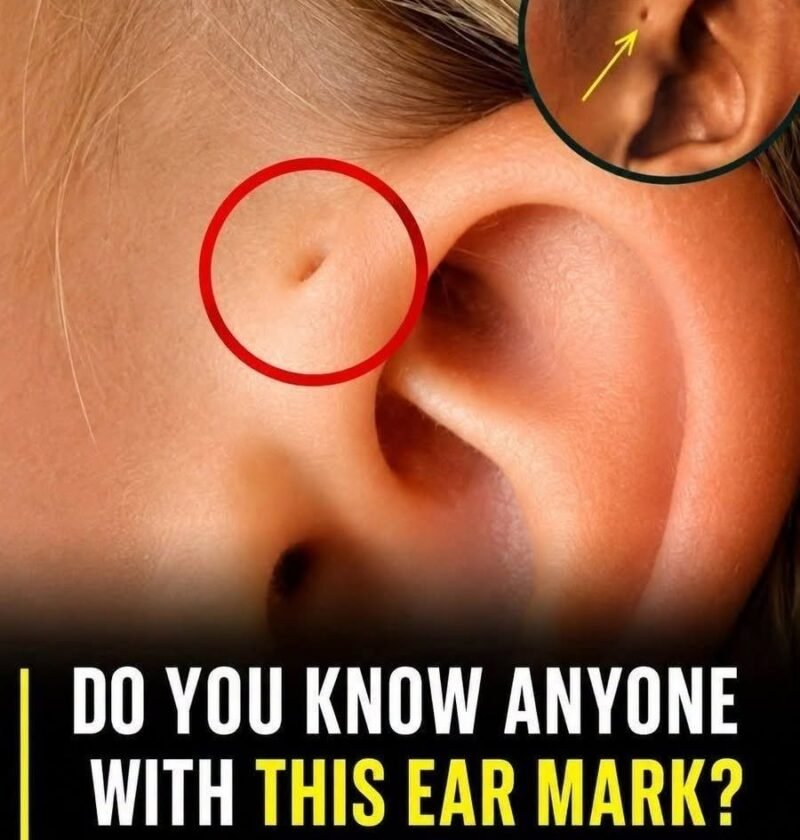
Why It Happens (And Debunking the “Fish Gill” Myth)
-
How it actually forms: During early fetal development (around the sixth week of pregnancy), the outer ear forms from six tiny bumps of tissue () that grow and fuse together. A preauricular pit occurs when those tissue folds fuse slightly incompletely, leaving a narrow, blind-ended tunnel lined with normal skin underneath the surface.
-
Not a gill slit: Popular posts often claim it is a remnant of evolutionary gills. In reality, it is simply a minor variation in how the skin of the outer ear folded together before birth.
-
How common it is: Roughly 1% to 2% of people worldwide have one—and it is significantly more common in people of East Asian and African descent (up to 4%–10%). It usually appears on one ear (most often the right), though about a quarter to half of people have it on both sides, and it often runs in families.
What It Means for Your Health
-
Usually completely harmless: Underneath the pinpoint opening lies a tiny skin-lined pocket. Because it is lined with normal skin, it can occasionally shed harmless white, cheesy dead skin cells (keratin) or sebum—similar to a blackhead or pore—without being infected.
-
The main risk is localized infection: If bacteria enter the narrow tract and get trapped, the pocket beneath the skin can become inflamed or infected, forming a painful swollen bump or abscess.
-
Rare genetic associations: In the vast majority of people, a preauricular pit is an isolated quirk. Very rarely—typically only when accompanied by other signs like hearing loss, neck cysts/pits, or kidney abnormalities (such as in Branchio-oto-renal syndrome)—doctors check hearing and kidney function during infancy or childhood.
Daily Care & What Not to Do
-
Leave it alone: Wash the outside of your ear gently with mild soap and water during your normal shower.
-
Do NOT squeeze, poke, or probe it: Trying to squeeze out white material or insert cotton swabs, pins, or tweezers pushes bacteria deeper into the tract and damages the delicate lining, making infection much more likely.
When to See a Doctor
-
Redness, warmth, tenderness, or a firm, growing lump in front of the ear
-
Thick yellow or foul-smelling pus draining from the opening
-
Fever or spreading facial swelling