This Is
Why We Get Cramps at Night
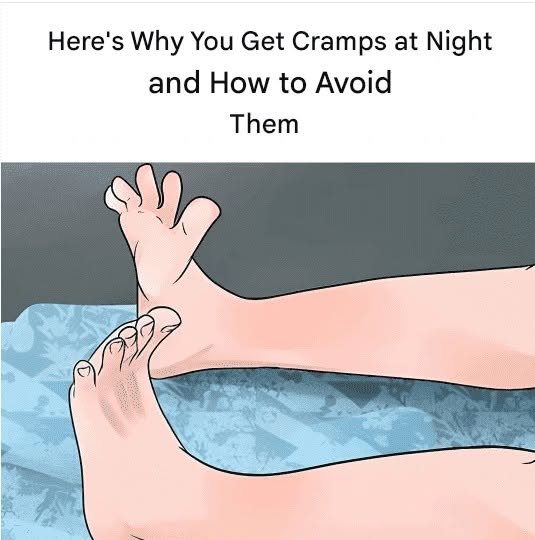
Nighttime leg cramps are sudden, involuntary muscle contractions—
often affecting the calf, foot, or thigh—that can wake you from
sleep. They become more common with age, but there isn’t always one single cause.
Common contributors
include:
- Muscle fatigue or overuse: A long day of walking, standing, or exercise can leave muscles more prone to cramping.
- Prolonged positions: Keeping your foot pointed downward or staying in one position for a long time may contribute.
- Dehydration: Not getting enough fluids can make cramps more likely, particularly after heavy sweating.
- Certain medications: Some medicines, including certain diuretics and cholesterol medications, can be associated with muscle cramps.
- Nerve or circulation problems: Conditions affecting nerves or blood flow can sometimes contribute, especially when cramps are frequent.
- Pregnancy and aging: Both can increase the likelihood of nighttime cramps.
What to do when a cramp strikes
Gently stretch and massage the affected muscle. For a calf cramp, straighten your leg and slowly pull your toes toward your face. Standing up and putting gentle weight on the leg can also help.
To reduce recurrence, stay adequately hydrated, stretch your calves gently before bed, and avoid suddenly increasing strenuous exercise.
Don’t automatically assume you need magnesium. Magnesium supplements don’t reliably prevent ordinary nighttime leg cramps in most adults unless there is an underlying deficiency or another specific reason to use them.
If cramps are frequent, severe, persistent, associated with swelling or weakness, or consistently affect one leg, it’s worth discussing them with a healthcare professional.