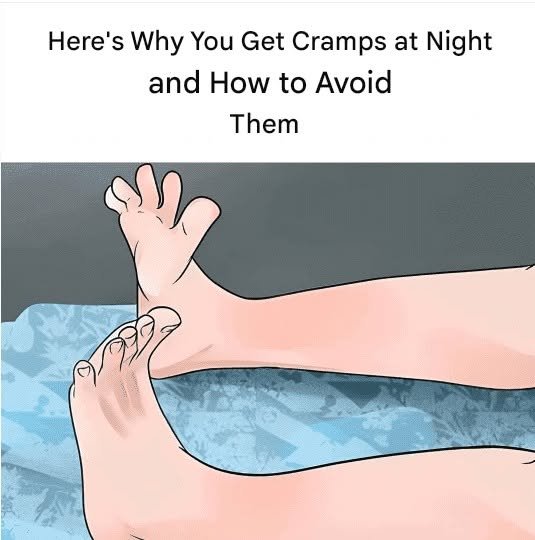
🌙 Why cramps can happen at night
Common contributors include:
- Muscle fatigue or overuse, particularly after more activity than usual.
- Prolonged sitting or standing during the day.
- Certain medications, including some diuretics and cholesterol-lowering medicines.
- Pregnancy and aging, both of which are associated with more frequent cramps.
- Dehydration may contribute in some people, although nighttime cramps aren’t simply caused by “not drinking enough water.”
- Some medical conditions affecting nerves, circulation, kidneys, or metabolism can also cause cramps. (mayoclinic.org)
🦵 What to do when a cramp strikes
Gently stretch the muscle. For a calf cramp, straighten the leg and pull the toes toward your face. Standing up and putting weight on the affected leg can also help.
Afterward, gentle massage and warmth may relax the muscle.
Can magnesium fix nighttime cramps?
Not necessarily. Magnesium is often promoted as a cure, but evidence suggests magnesium supplements generally don’t provide much benefit for ordinary nighttime leg cramps in older adults who aren’t magnesium deficient. (cochrane.org)
Don’t automatically take potassium or magnesium supplements for cramps without discussing them with a healthcare professional—particularly if you have kidney disease or take medications that affect electrolyte levels.
If cramps are frequent, severe, newly appearing, associated with swelling or weakness, or consistently affecting one leg, it’s worth getting evaluated to look for an underlying cause.