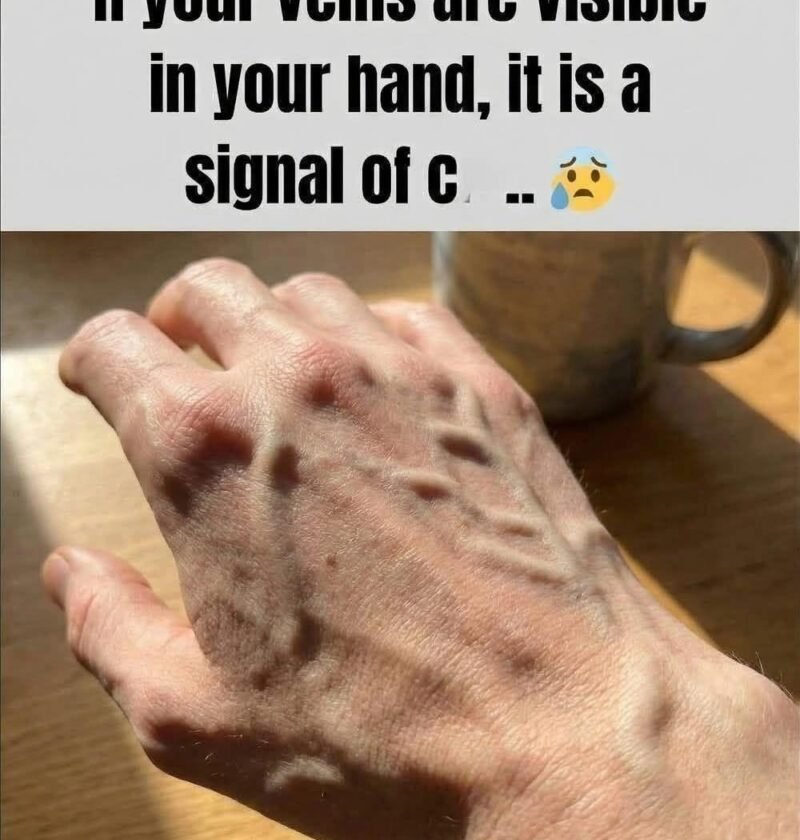
If your veins are unusually visible, it doesn’t automatically mean something is wrong. Visible veins can be completely normal, especially in people with low body fat, muscular builds, fair/thin skin, or after
exercise or exposure to heat.
What visible veins can mean
- Low body fat: Less tissue covering superficial veins makes them easier to see.
- Exercise: Increased blood flow and temporary swelling of muscles can make veins more prominent.
- Heat: Blood vessels widen to help the body release heat.
- Age: Skin becomes thinner and loses some elasticity, making veins more noticeable.
- Genetics: Some people naturally have more prominent superficial veins.
- Dehydration: Can sometimes make veins appear more prominent, although visible veins alone aren’t a reliable way to diagnose dehydration.
When should you pay attention?
A new or suddenly prominent vein, particularly if it is associated with pain, swelling, redness, warmth, tenderness, or discoloration, deserves medical evaluation. A swollen, painful leg with sudden shortness of breath or chest pain can be an emergency.
Also, prominent veins on the abdomen or chest can occasionally be associated with an underlying circulation problem and shouldn’t simply be dismissed.
Bottom line: Visible veins usually mean they’re close to the skin’s surface—not that you have a particular disease or that you’re necessarily “healthy.” The context and any accompanying symptoms matter.