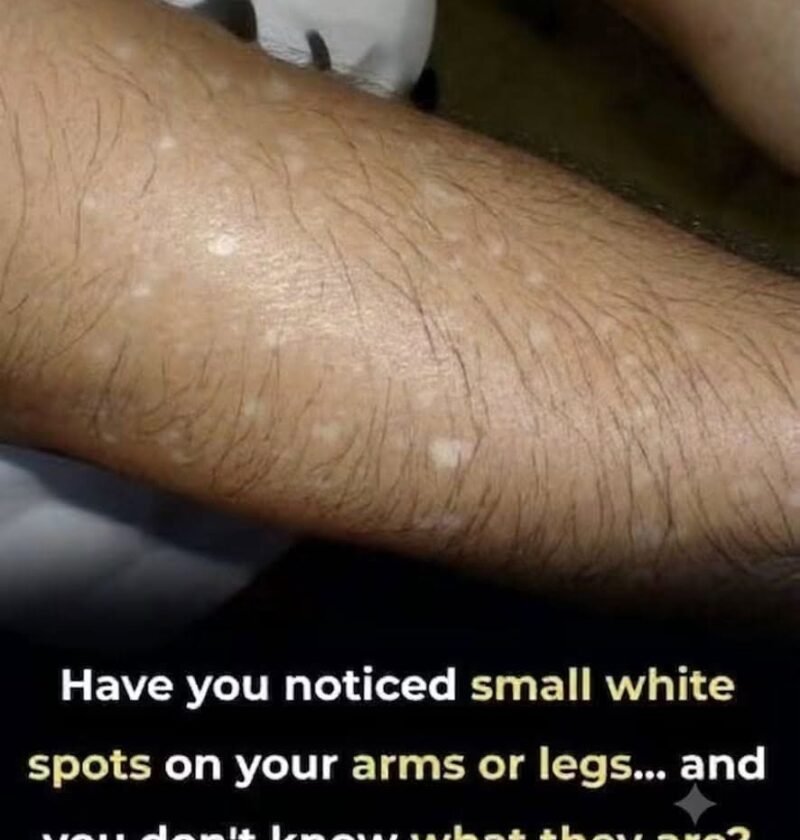
Finding small white spots on your arms and legs can be alarming, but they are usually harmless. These spots typically happen when the skin loses its pigment (melanin), experiences a mild infection, or heals from inflammation.
Common Causes of White Spots on Arms and Legs
-
Idiopathic Guttate Hypomelanosis (IGH): Often called “sunspots in reverse,” these are small (2 to 5 mm), flat, porcelain-white dots that commonly appear on the shins and forearms. They are generally linked to cumulative, long-term sun exposure and aging, and they are completely benign.
-
Tinea Versicolor: A common, mild fungal (yeast) overgrowth on the skin. It can cause discolored patches that may be slightly scaly or itchy. These spots often become much more noticeable after you spend time in the sun, as the affected areas do not tan normally.
-
Pityriasis Alba: Frequently seen in children and young adults with dry or eczema-prone skin, this condition starts as mildly dry, pink patches that eventually fade into pale or white spots, especially on the outer arms.
-
Vitiligo: An autoimmune condition where the body attacks its own pigment-producing cells (melanocytes), resulting in sharply defined, milk-white patches. These patches can sometimes appear symmetrically on both sides of the body.
-
Post-Inflammatory Hypopigmentation: If you recently had a scrape, bug bite, rash, or patch of eczema on your limbs, the skin may temporarily lose its color as it heals. Normal pigmentation usually returns over several months.
Management and Prevention
-
Protect Your Skin from the Sun: Wearing broad-spectrum sunscreen (SPF 30 or higher) daily minimizes the contrast between the white spots and tanned skin, preventing sun-related spots like IGH from becoming more pronounced.
-
Address Fungal Causes: If tinea versicolor is suspected, over-the-counter or prescription antifungal washes, shampoos, or creams are typically effective.
-
Keep Skin Hydrated: For dry-skin conditions like pityriasis alba, gentle, fragrance-free moisturizers help repair the skin barrier.
When to See a Dermatologist
While most white spots are purely cosmetic, you should consult a healthcare professional or dermatologist if the spots are spreading rapidly, become intensely itchy, inflamed, or painful, or if you suspect an autoimmune condition like vitiligo that would benefit from early management.
Are the white spots flat, raised, or scaly, and have you noticed any itching or recent sun exposure on those areas?