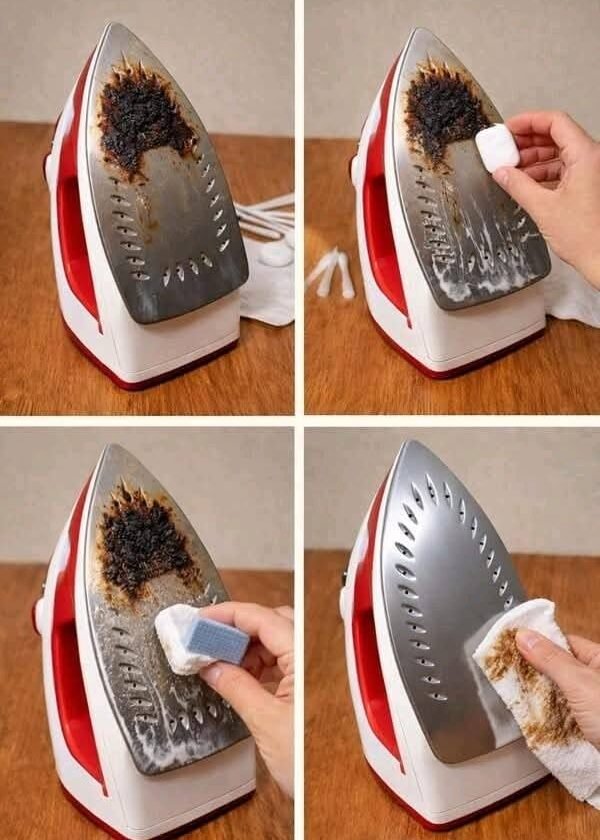
Getting rid of stubborn, baked-on grease and burnt food doesn’t require harsh, chemical-heavy oven cleaners. With a few pantry staples like baking soda, vinegar, and coarse salt, you can easily restore your cookware to a brilliant shine.
Here is a simple, natural guide to cleaning different types of dirty pots and pans.
1. The Ultimate Baking Soda Paste (For Burnt Food & General Grime)
Best for: Stainless steel, ceramic, and enameled cast iron.
-
How to do it:
-
Mix baking soda and a little water in a small bowl until it forms a thick, spreadable paste.
-
Smear the paste generously over the burnt or greasy spots inside and outside the pan.
-
Let it sit for 15 to 30 minutes (or overnight for severely charred pans). The mild alkalinity of the baking soda breaks down grease and softens burnt carbon.
-
Scrub gently with a non-scratch nylon scrubber or sponge, then wash with warm, soapy water and rinse.
-
2. The Boiling Vinegar & Baking Soda Trick (For Tough, Baked-On Grease)
Best for: Stainless steel pots and stubborn bottom crusts.
-
How to do it:
-
Cover the bottom of the dirty pan with a layer of water and about 1 cup of white vinegar.
-
Place the pan on the stove and bring the liquid to a boil.
-
Remove the pan from the heat and stir in 2 tablespoons of baking soda (be careful—it will fizz up vigorously!).
-
Let the mixture sit for 15 to 20 minutes, then pour it out and scrub away the loosened grime with a sponge.
-
3. Coarse Salt & Lemon (For Cast Iron and Copper)
Best for: Seasoned cast-iron skillets and tarnished copper pots.
-
For Cast Iron:
-
Avoid soap, which strips the seasoning. Instead, pour a generous amount of coarse sea salt into the warm pan.
-
Use a damp sponge or paper towel to scrub the pan in circular motions—the salt acts as a natural, non-scratch abrasive. Rinse with warm water and dry thoroughly immediately.
-
-
For Copper:
-
Cut a lemon in half, sprinkle coarse salt generously over the exposed fruit, and rub it directly onto the tarnished copper surface. The acid in the lemon juice combined with the salt strips away oxidation and restores a bright, shiny finish. Rinse and dry.
-
Quick Reference Summary
| Cookware Type | Safe Natural Cleaning Agents | What to Avoid |
| Stainless Steel | Baking soda, vinegar, lemon | Steel wool (can scratch the finish permanently) |
| Cast Iron | Coarse salt, hot water, light oil | Soaking in water, dish soap, dishwasher |
| Non-Stick | Warm soapy water, microfiber cloth | Abrasive scrubbers, baking soda pastes (can strip the coating) |
| Copper | Lemon juice and salt | Harsh chemical bleaches |
Do you have a particularly stubborn pot or pan you’re trying to salvage, or a specific material you’re working with?