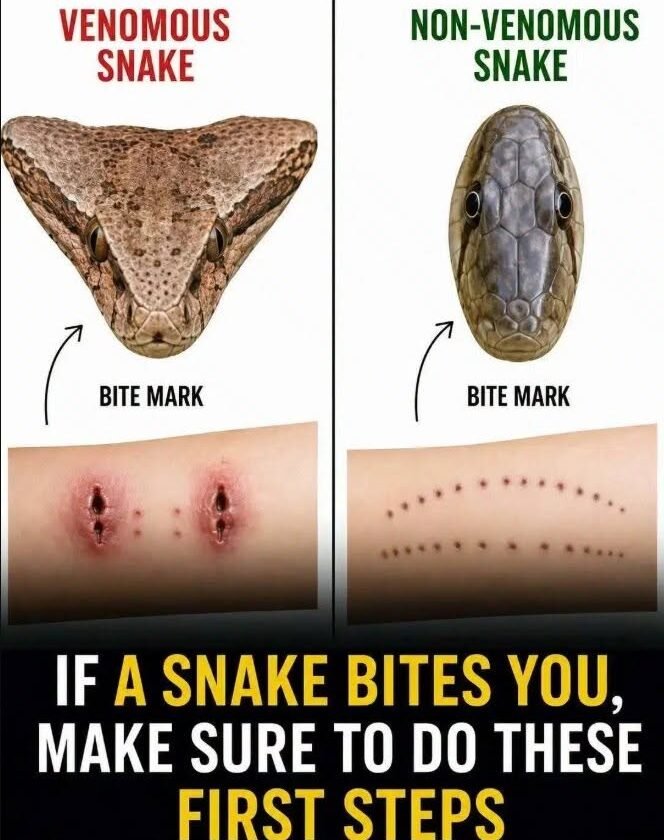
A snake bite can be a frightening medical emergency. Knowing what to do—and what not to do—can significantly reduce the risk of serious complications and slow the spread of venom while you wait for professional help.
Immediate First Steps
-
Move Away from the Snake: Step back or move out of the snake’s striking distance immediately. Never try to catch, handle, or kill the snake, as even a dead snake can bite via reflex muscle action.
-
Stay Calm and Still: Panic increases your heart rate, which causes blood to pump faster and spreads the venom more quickly through your body. Sit or lie down and keep the affected limb still.
-
Remove Constrictive Items: Swiftly take off any rings, watches, bracelets, shoes, or tight clothing near the bite area. Swelling typically develops rapidly around a snake bite, and leaving tight items on can cut off circulation.
-
Position the Limb Properly: If possible, keep the bite area at or below the level of your heart to help slow the flow of venom toward your core.
-
Clean and Cover the Wound: Gently wash the bite with soap and water. Cover it loosely with a clean, dry, sterile bandage.
-
Call Emergency Services (911): Treat every unknown or potentially venomous snake bite as a medical emergency. Do not wait for symptoms like pain or swelling to appear before seeking help.
Critical “What NOT to Do” Warnings
Outdated home remedies can cause severe tissue damage and worsen the injury. Avoid the following:
-
Do NOT cut into the bite wound with a knife or razor.
-
Do NOT attempt to suck out the venom (using your mouth or a commercial suction device).
-
Do NOT apply a tourniquet or tight band that completely restricts blood flow.
-
Do NOT apply ice or submerge the wound in cold water.
-
Do NOT consume alcohol or caffeine, as these substances can speed up your body’s absorption of venom.
-
Do NOT take pain relievers like aspirin, ibuprofen, or other NSAIDs, as they can thin your blood and worsen bleeding.
Helpful Details for Medical Staff
If it is safe to do so without risking another bite, try to remember the snake’s color, size, and pattern. If you have a smartphone handy and can take a photo safely from a distance, do so; identifying the species can help doctors choose the correct antivenom faster.
Are you currently dealing with a snake bite situation, or are you looking up first aid information for general preparedness?