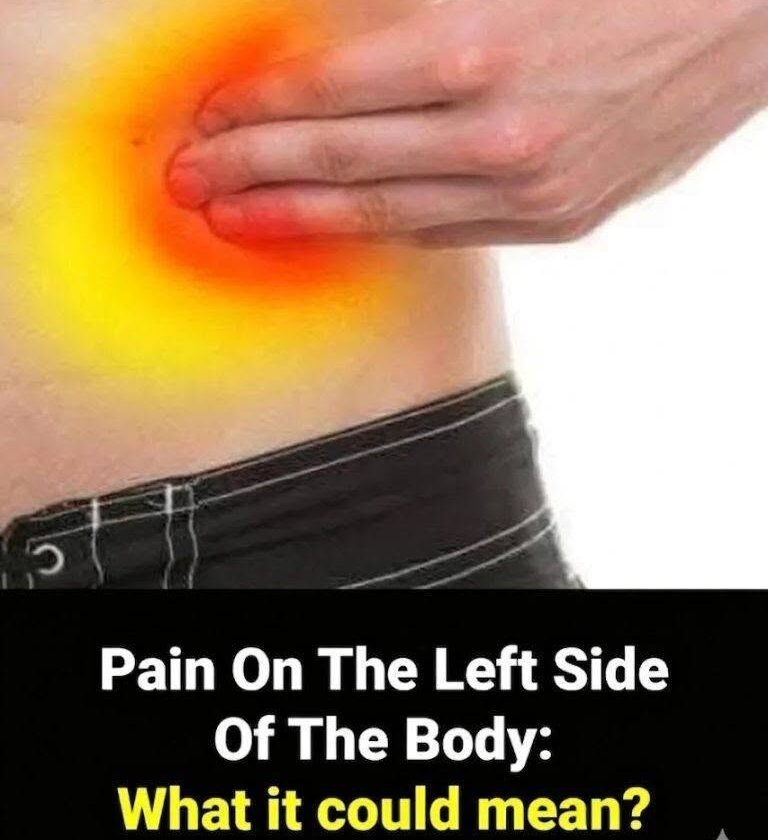
The headline “Pain on the left side of the body: What it could mean?” is a classic health anxiety trigger. Articles covering this topic often list dozens of disparate symptoms—ranging from a harmless muscle twitch in your arm to chest tightness—and frame them all as potential emergencies, leaving you feeling unnecessarily panicked.
When you experience pain on the left side, your brain immediately jumps to worst-case scenarios. However, anatomy teaches us that the left side of your body contains a wide variety of structures—musculoskeletal, neurological, gastrointestinal, and cardiac—each with very different causes for discomfort.
Let’s cut through the alarmism and look at how medical logic categorizes left-sided pain.
Categorizing Left-Sided Pain: Anatomy vs. Anxiety
Because pain can radiate or feel localized, doctors look at the location and the accompanying symptoms to determine the true source. Here is how different regions break down:
1. Upper Left / Chest Area
-
What it often is: Musculoskeletal strain (like costochondritis, an inflammation of the cartilage connecting your ribs to your breastbone), acid reflux (GERD), or trapped gas in the splenic flexure of the colon.
-
The Clinical Distinction: True cardiac pain (angina or a heart attack) is rarely a sharp, pinpoint pain that gets worse when you press on your chest or twist your body. Instead, cardiac discomfort typically presents as a heavy pressure, squeezing, tightness, or fullness in the center or left of the chest, often radiating to the jaw, neck, back, or left arm, and accompanied by shortness of breath or sweating.
2. Lower Left Abdomen
-
What it often is: This is the home of the descending and sigmoid colon. The most common benign causes are gas, bloating, or constipation.
-
When to pay attention: Persistent, localized pain in the lower left abdomen accompanied by fever, nausea, or changes in bowel habits can point toward diverticulitis (inflammation of small pouches in the colon wall), which requires medical diagnosis.
3. Left Flank / Back
-
What it often is: Muscle spasms, poor posture, or lower back strain.
-
The Clinical Distinction: Kidney-related pain (such as a kidney stone or a kidney infection/pyelonephritis) is typically felt higher up in the back (the flank, under the rib cage) and is often accompanied by fever, chills, or changes in urination.
Red Flag Symptoms: When to Seek Immediate Care
While most everyday aches and pains on the left side are benign muscular or digestive quirks, you should always seek emergency medical evaluation if left-sided chest or upper body pain is accompanied by any of these warning signs:
-
Sudden pressure, squeezing, or fullness in the center or left of your chest.
-
Pain that radiates up into your jaw, neck, left shoulder, or down your left arm.
-
Sudden shortness of breath, cold sweats, dizziness, or lightheadedness.