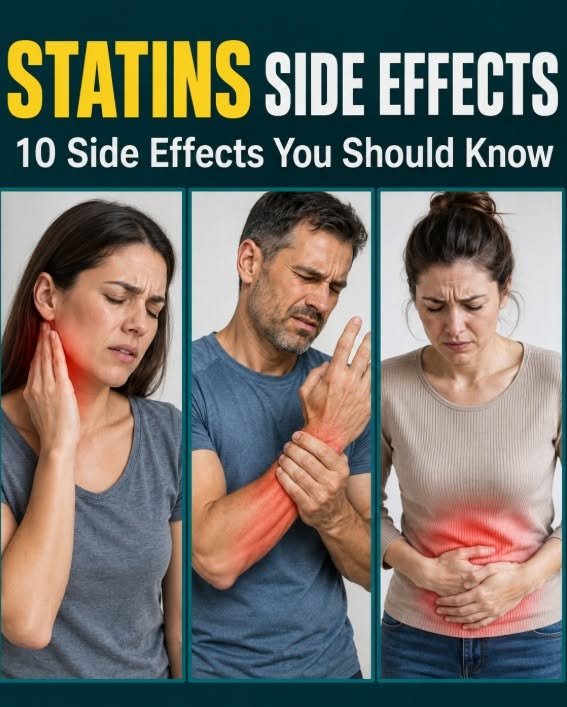
Statin Side Effects: 10 Important Things to Know Before Making Changes
Statins are medicines commonly prescribed to lower LDL (“bad”) cholesterol and reduce the risk of heart attacks and strokes. They are among the most studied medications in medicine, but like all medicines, they can have side effects.
1. Muscle aches can happen
- Some people taking statins report muscle soreness, cramps, or weakness.
- If symptoms are new, severe, or worsening, contact a healthcare professional.
2. Serious muscle injury is rare
- A rare condition called rhabdomyolysis can cause severe muscle breakdown and may lead to kidney problems.
- Seek medical advice for severe muscle pain, marked weakness, or dark-colored urine.
3. Mild digestive symptoms may occur
- Some people experience nausea, diarrhea, constipation, or stomach discomfort.
4. Liver enzyme changes can occur
- Statins may cause changes in liver enzymes in some people.
- Routine monitoring may be recommended in certain situations, especially if symptoms suggest a liver problem.
5. Blood sugar levels may slightly increase
- Statins can modestly raise blood glucose in some people, particularly those already at risk for diabetes.
- The cardiovascular benefits often outweigh this risk for people who need statin therapy.
6. Memory concerns are reported but uncommon
- Some people report temporary memory issues, but research has not shown a clear link between statins and causing dementia.
7. Drug interactions matter
- Certain medicines, supplements, and even some foods (depending on the statin) can affect how the drug works or increase side-effect risk.
8. Don’t stop suddenly without medical advice
- Stopping a statin on your own can increase cholesterol levels and may raise cardiovascular risk if the medication was prescribed for prevention.
9. Side effects can often be managed
A healthcare professional may consider:
- Adjusting the dose
- Switching to a different statin
- Changing the dosing schedule
- Checking for other causes of symptoms
10. The benefits are significant for many people
- For people at higher risk of heart disease or stroke, statins can substantially reduce cardiovascular risk.
Contact a healthcare professional if you experience:
- Severe muscle pain or weakness