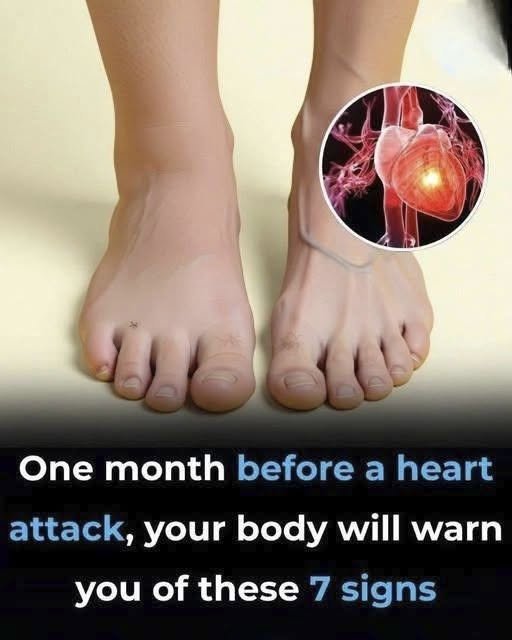
While heart attacks are often perceived as sudden, dramatic events, clinical research shows that many people experience early warning signs (known as prodromal symptoms) days, weeks, or even a month in advance. These subtle signals occur when coronary arteries are significantly narrowed by plaque, temporarily restricting oxygen-rich blood flow to the heart muscle.
Recognizing these early signs can be life-saving. Here are 7 warning signs that can appear in the weeks leading up to a heart attack, along with how they differ from everyday fatigue or stress.
1. Mild, Intermittent Chest Discomfort (Angina)
Unlike the crushing, constant chest pain associated with an active heart attack, early warning chest discomfort is often subtle and fleeting.
-
What it feels like: A mild pressure, tightness, squeezing, fullness, or a burning sensation in the center or left side of the chest.
-
The pattern: It tends to “come and goes”, lasting for a few minutes during physical exertion or stress, and then easing up when you rest.
2. Unusual and Overwhelming Fatigue
Extreme, unexplained exhaustion is one of the most frequently reported early signs, particularly among women.
-
What it feels like: A profound, heavy fatigue that doesn’t go away with a good night’s sleep. You might feel completely wiped out after simple, routine activities like making the bed, walking up a single flight of stairs, or carrying groceries.
3. Shortness of Breath
If your heart is struggling to pump efficiently due to reduced blood flow, your body and lungs feel the impact immediately.
-
What it feels like: Finding yourself unusually breathless after minor exertion—or even while resting—when you normally wouldn’t experience it. Some people report feeling as though they cannot catch a deep breath, even while sitting still.
4. Sleep Disturbances and Insomnia
Difficulty falling or staying asleep is a surprisingly common early indicator, often linked to underlying nocturnal anxiety, subtle breathing difficulties, or mild discomfort.
-
What it feels like: Waking up frequently during the night, struggling with sudden bouts of insomnia, or waking up feeling anxious, restless, or drenched in sweat for no clear reason.
5. Radiating Pain Beyond the Chest
Because the nerves from the heart share pathways with other parts of the upper body, reduced heart function can signal pain in unexpected areas.
-
What it feels like: A dull ache, discomfort, or shooting sensation traveling down one or both arms (especially the left), or spreading into the shoulders, upper back, neck, jaw, or upper stomach.
6. Unexplained Digestive Issues or Nausea
Digestive red flags are frequently mistaken for acid reflux, heartburn, or a bad meal, but they can sometimes stem from poor cardiac output.
-
What it feels like: Sudden, mild bouts of nausea, indigestion, or a sour stomach that occurs without an obvious dietary trigger, particularly when coupled with fatigue or lightheadedness.
7. Dizziness, Lightheadedness, or Sudden Anxiety
When blood flow to the heart fluctuates, blood pressure can drop transiently, affecting the brain and nervous system.
-
What it feels like: Brief spells of lightheadedness, dizziness, or a sudden, unexplainable wave of intense anxiety or an “impending sense of doom” for no apparent reason