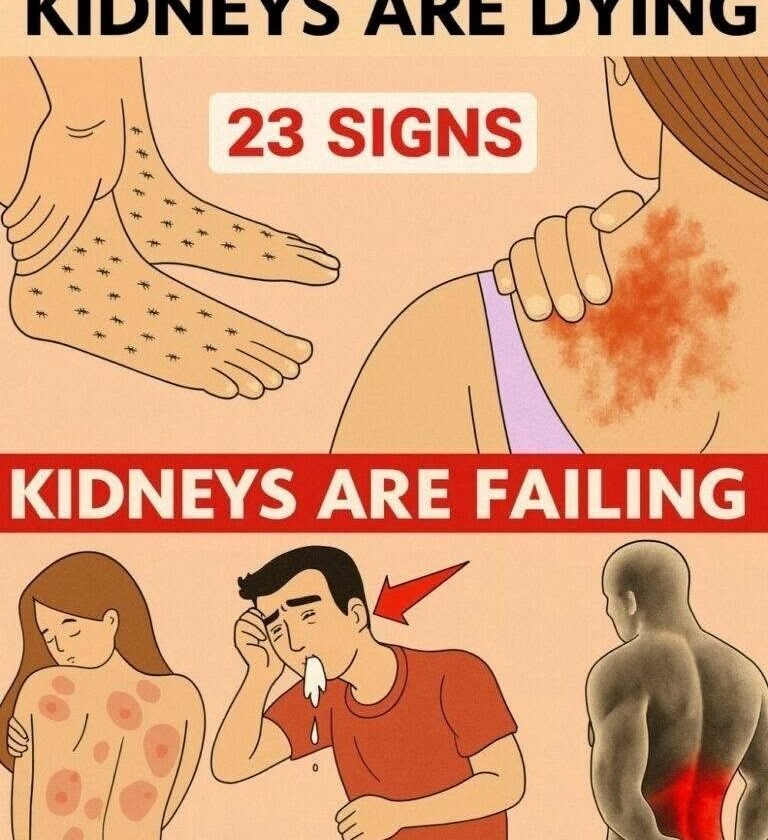
When people think of kidney trouble, they usually think of lower back pain or changes in bathroom habits. However, because your kidneys filter your entire blood supply and regulate hormones, minerals, and fluid balance, declining kidney function can manifest in surprisingly strange and widespread ways throughout the body.
Here is a look at 23 unusual or lesser-known signs that your kidneys might be struggling, broken down by how they affect different systems.
Urinary and Fluid Changes
-
Excessively Foamy Urine: If your urine looks like scrambled eggs or requires flushing multiple times, it often indicates albumin (protein) leaking through damaged kidney filters.
-
Periorbital Edema (Puffy Eyes): Chronic protein loss in the urine can cause fluid to pool in loose tissues, resulting in persistent puffiness around the eyes, especially in the morning.
-
Nocturia (Waking Up at Night to Pee): Needing to get up multiple times during the night happens when the kidneys’ concentrating ability is impaired.
-
“Cola” or “Meat-Wash” Colored Urine: Pink, brown, or red urine can signify hematuria—blood leaking through damaged filters due to inflammation, stones, or structural issues.
-
Tight Shoes and Sock Indentations: Fluid retention (edema) caused by poor sodium excretion often shows up as swelling in the lower legs, ankles, and feet.
Skin and Appearance Changes
-
“Bone-Deep” Itching (Uremic Pruritus): When kidneys fail to filter phosphorus and other waste, mineral imbalances build up, causing an intense, deep-seated itch that doesn’t improve with lotion.
-
Metallic Taste and Ammonia Breath: A buildup of urea in the blood (uremia) can alter your sense of taste, making food taste metallic and giving breath an unusual, ammonia-like odor.
-
Half-and-Half Fingernails (Lindsay’s Nails): A rare visual clue where the bottom half of the nails appears white and the top half looks reddish-brown or pink, sometimes associated with advanced kidney disease.
-
Calcinosis Cutis: Hard, painful white calcium bumps or deposits forming under the skin due to severe calcium-phosphorus imbalances.
-
Uremic Frost: In very advanced, untreated kidney failure, sweat can evaporate and leave a fine, powdery, white urea residue on the skin.
-
Easy Bruising and Pallor: Anemia and altered blood platelet function can make the skin look pale, yellowish-gray, and bruise much more easily.
Neurological and Systemic Signs
-
Restless Legs Syndrome (RLS): An overwhelming urge to move the legs, particularly at night or when resting, frequently plagues individuals with chronic kidney disease due to toxin buildup or nerve damage.
-
“Brain Fog” and Concentration Issues: Waste accumulation and anemia restrict oxygen and clear thinking, making it hard to focus, remember details, or complete simple mental tasks.
-
Unexplained Muscle Cramps: Electrolyte imbalances—specifically abnormal sodium, calcium, potassium, or phosphorus levels—frequently trigger painful cramps, particularly in the calves.
-
Persistent Fatigue and Exhaustion: Healthy kidneys make EPO (erythropoietin), a hormone telling the body to make red blood cells. Failing kidneys drop EPO production, leading to anemia, oxygen starvation, and bone-weary fatigue.
Temperature, Breathing, and Metabolism
-
Feeling Cold All the Time: Anemic individuals often feel chilled even in a warm room because their blood isn’t efficiently delivering oxygen and warmth to tissues.
-
Shortness of Breath on Minimal Exertion: This can stem from fluid backing up into the lungs (pulmonary congestion) or from severe anemia starving the body of oxygen.
-
Sudden Loss of Appetite (Anorexia): A general buildup of toxins in the bloodstream can cause nausea, turning you off food completely and leading to unintended weight loss.
-
Sleep Apnea and Insomnia: Disrupted toxin filtration, chemical imbalances, and airway changes make it difficult to fall or stay asleep, strongly linking chronic kidney disease to sleep apnea.
-
Early-Onset High Blood Pressure: Unexplained, hard-to-control hypertension—especially if it develops before age 35—can either be a cause of kidney damage or a sign that the kidneys are signaling for higher pressure to force filtration.
Skeletal and Structural Signs
-
Bone Pain and Fragility (Osteoporosis): Because kidneys activate Vitamin D and balance calcium and phosphorus, failing kidneys leach calcium from the bones, making them weak, brittle, and prone to fractures.
-
Calcified Arteries on X-rays: Advanced mineral metabolism disorders can cause calcium to deposit inside blood vessel walls, stiffening arteries.
-
Hiccups (Persistent and Unexplained): Though unusual, chronic, stubborn hiccups can occasionally be triggered by severe metabolic waste accumulation irritating the diaphragm and nerves in advanced kidney decline.
⚠️ When to see a doctor: Many of these signs can mimic other conditions, but if you notice persistent changes—such as chronic fatigue, changes in urination, unexplained swelling, or foamy urine—a simple routine blood test (checking serum creatinine and eGFR) and a urine test can evaluate your kidney health quickly.
Are you or someone you know currently experiencing any specific symptoms that prompted you to look into this?