What Is the “Ideal” Weight for Your Height?
There isn’t one perfect weight for everyone. Height, body composition, muscle mass, waist size, age, sex, and overall health all matter.
For adults, BMI is a useful screening tool, but it isn’t a diagnosis and doesn’t distinguish muscle from fat.
General adult BMI ranges
| BMI | Category |
|---|---|
| Below 18.5 | Underweight |
| 18.5–24.9 | Healthy weight |
| 25.0–29.9 | Overweight |
| 30 or higher | Obesity |
These categories apply to adults regardless of age or sex.
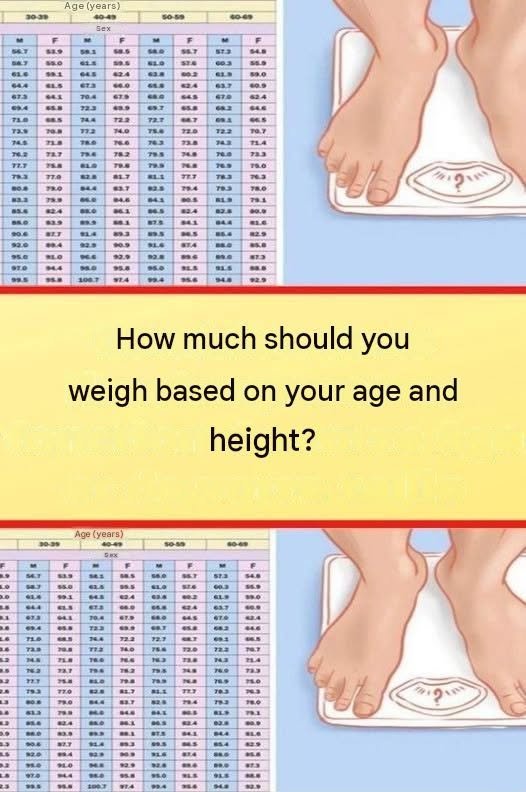
⚖️ Approximate healthy-weight ranges by height
Using a BMI of 18.5–24.9:
- 5’0″ (152 cm): about 95–128 lb (43–58 kg)
- 5’2″ (157 cm): about 101–136 lb (46–62 kg)
- 5’4″ (163 cm): about 110–145 lb (50–66 kg)
- 5’6″ (168 cm): about 115–154 lb (52–70 kg)
- 5’8″ (173 cm): about 125–164 lb (57–74 kg)
- 5’10” (178 cm): about 129–174 lb (59–79 kg)
- 6’0″ (183 cm): about 137–184 lb (62–83 kg)
These are ranges, not targets. A person with substantial muscle mass may have a BMI above 25 while having relatively little body fat. Conversely, someone with a “healthy” BMI can still have excess body fat.
One important point after 65
For older adults, avoiding unintentional weight loss and preserving muscle strength are also important. Simply trying to reach the lowest possible BMI isn’t necessarily appropriate.