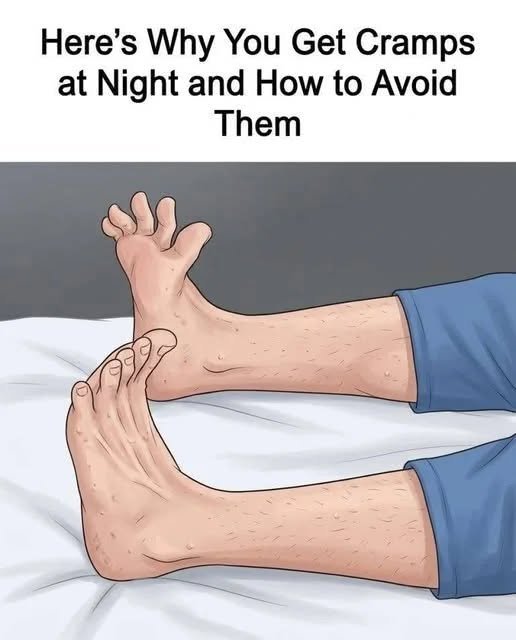
7 Common Causes of Nighttime Leg Cramps
-
Muscle Fatigue & Overuse: Long hours standing on hard surfaces, walking, running, or intense workouts during the day can leave leg muscles tired and more prone to spasms overnight.
-
Prolonged Sitting or Inactivity: Staying seated for long stretches—or suddenly shifting position in bed—can leave muscles stiff and alter normal neuromuscular signaling.
-
Pointed Foot Position in Bed: Sleeping on your back or stomach naturally lets your toes point downward (plantarflexion), keeping the calf muscle in a shortened state where a sudden stretch or spasm triggers more easily.
-
Fluid Shifts & Mild Dehydration: Sweating, hot weather, or inconsistent water intake during the day can affect fluid balance and muscle excitability—though chugging water right before sleep mostly leads to bathroom trips rather than instant cramp relief.
-
Electrolyte Imbalances: Shifts in minerals such as magnesium, potassium, or calcium can play a role in nerve-to-muscle firing, though routine supplements don’t stop cramps for everyone.
-
Pregnancy & Hormonal Changes: Night cramps are very common during pregnancy—especially in the second and third trimesters—due to extra leg weight, fluid changes, and circulation shifts.
-
Circulation, Nerve, or Medication Factors: Reduced blood flow in the legs, peripheral nerve irritation, thyroid or kidney issues, or medications (such as diuretics or statins) can make nighttime cramps more frequent.
How to Stop a Cramp Naturally When It Strikes
-
Pull the toes/foot upward (dorsiflexion): If it’s in your calf, straighten your leg and gently pull your toes and foot back toward your shin—or stand up and lean slightly forward with your heel pressed down to stretch the back of the lower leg.
-
Massage the tight knot: Use steady, gentle pressure with your hands or a warm compress to coax the muscle fibers to relax.
-
Walk around for a minute: Once the sharp peak eases, taking a few slow steps helps reset muscle tension and circulation.
-
Apply warmth: A warm towel, heating pad, or warm shower/bath can soothe lingering soreness after the muscle lets go.
Natural Ways to Prevent Them Over Time
-
Stretch gently before bed: Spend 1–2 minutes on light calf and hamstring stretches in the evening rather than doing hard leg workouts right before sleep.
-
Keep feet from pointing downward: Avoid heavy, tightly tucked blankets that push your toes down all night; sleeping on your side with a pillow between your knees can also take tension off your legs.
-
Sip fluids steadily earlier in the day: Keep hydration consistent from morning through late afternoon so you aren’t dehydrated or waking up to urinate at night.
-
Support daytime circulation: Take short movement breaks if you sit or stand for long periods, and wear comfortable, supportive footwear.
When to see a doctor: Get checked by a healthcare professional if nighttime cramps happen often, disrupt sleep most nights, last longer than 10 minutes, come with leg swelling, redness, or numbness/weakness, or start after a new medication.