Why These Bumps Form and Appear to Spread
-
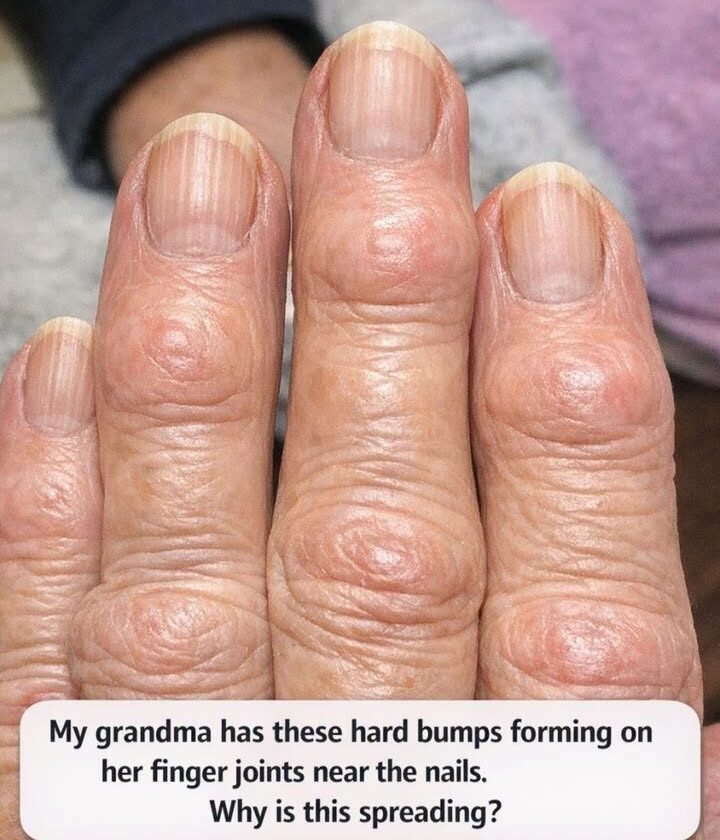
Cartilage wear and bone spurs (osteophytes): In osteoarthritis, the smooth cartilage cushioning the joint gradually thins. In response, the body lays down extra bone along the joint edges, creating firm, rounded lumps right near the end joint of the finger.
-
Why more fingers get involved: Hand osteoarthritis frequently affects multiple fingers symmetrically or sequentially—especially in older women and people with a family history of hand arthritis. Having a bump on one finger makes it common for neighboring fingers to develop similar changes later on.
-
Flare-ups vs. lasting bone: Early on, a joint may feel mildly swollen, stiff, or achey—especially in the morning or after gripping tasks—before settling into a firm, relatively painless bump. Once bone spurs form, they don’t simply dissolve away, though symptoms often quiet down after an active phase.
-
Other possibilities a doctor keeps in mind: Less commonly, bumps near the fingertips or joints can relate to Bouchard’s nodes (at the middle finger joints), gout (uric acid crystals, which usually cause sudden, hot, painful swelling), psoriatic arthritis, or a small mucous cyst (a fluid-filled bump near the nail base that can sometimes groove the nail).
Ways to Ease Discomfort and Protect Her Hands
-
Gentle warmth or cold: Warm water soaks or a warm compress can ease stiffness; a cool pack may help if a joint feels mildly flared or tender.
-
Joint-friendly ergonomics: Using tools with thicker, cushioned grips, avoiding tight pinch-and-twist movements when possible, and taking short breaks during repetitive hand tasks reduces strain on small joints.
-
Topical and medical options: Over-the-counter topical anti-inflammatory gels (such as topical NSAIDs) or other treatments recommended by a doctor can help manage aching, while physical/hand therapy can help preserve mobility and grip comfort.
When to have a doctor check her hands: Schedule a visit if the bumps grow rapidly, become very red, hot, or severely painful, cause a finger to drift or lock up, or come with noticeable nail changes, numbness, or tingling.