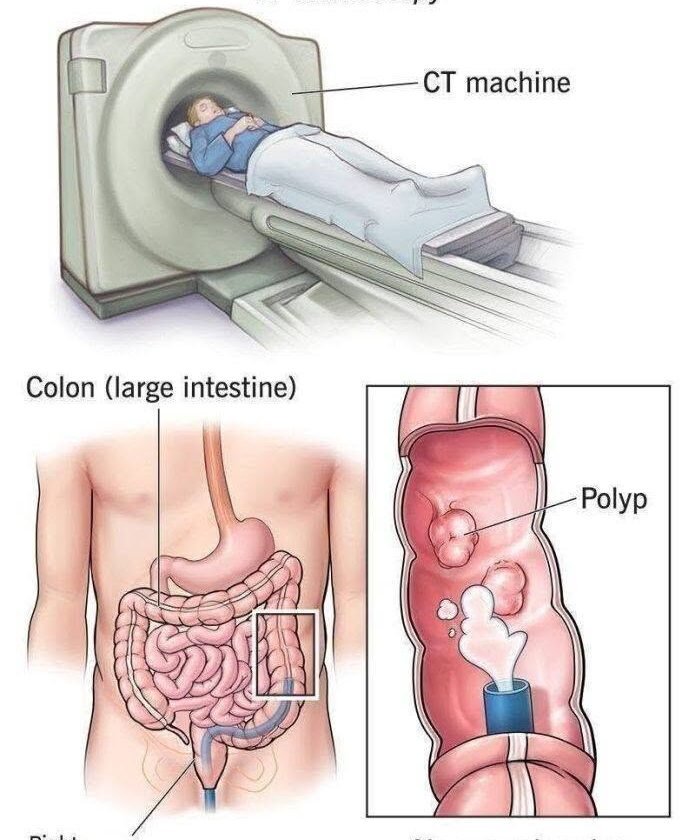
The phrase “non-invasive colonoscopy” usually refers to established imaging options like CT colonography (virtual colonoscopy) or newer emerging screening technologies (such as advanced stool DNA or microbiome-based tests, and blood-based liquid biopsies).
While these options avoid a traditional camera scope and intravenous sedation, it is important to look at what they actually change—and what they don’t:
1. The Bowel Preparation Stays the Same
A common misconception is that skipping the scope means skipping the cleaning process. However, for a virtual colonoscopy or any accurate imaging of the intestinal lining, a completely clean bowel is still required. The laxative preparation and dietary restrictions beforehand remain necessary so that residual waste isn’t mistaken for polyps or growths.
2. Virtual Colonoscopy (CT Scan)
-
How it works: Instead of a long, flexible tube traveling through the entire colon, a small, short rectal tube is used to gently inflate the colon with air or carbon dioxide. A low-dose CT scanner then takes rapid cross-sectional X-rays, which computers reconstruct into a 3D “fly-through” view for radiologists.
-
The Pros: No sedation is required, the scan takes only a few minutes, and it allows doctors to view structures outside the colon as well.
-
The Catch: If the scan detects a polyp or suspicious growth, you still need a traditional colonoscopy anyway to remove it or take a biopsy. Furthermore, virtual colonoscopies involve low-dose radiation and can sometimes miss smaller, flat, or hard-to-see lesions.
3. Non-Invasive Stool and Blood Tests
Other non-invasive paths include multi-target stool DNA tests or blood-based liquid biopsies. While these are convenient for routine, average-risk screening, they are designed to flag warning signs or markers of cancer. If a non-invasive test comes back positive, a conventional colonoscopy is universally required to investigate and clear the tissue.