Restoring a greasy, burnt-on gas stove top to look like new doesn’t require harsh chemical oven cleaners or expensive specialty products. Two simple, natural kitchen staples—baking soda and hydrogen peroxide (or plain white vinegar)—create a powerful, non-toxic paste that lifts baked-on grease and carbon without scratching your enamel or stainless steel.
Here is the step-by-step method to deep-clean your gas stovetop safely and effectively.
What You Need
-
Baking Soda (acts as a gentle abrasive and cuts grease)
-
Hydrogen Peroxide (or White Vinegar)
-
A dish sponge with a non-scratch scrub pad
-
Microfiber cloths
-
A bowl for mixing
-
Rubber gloves (optional, but recommended)
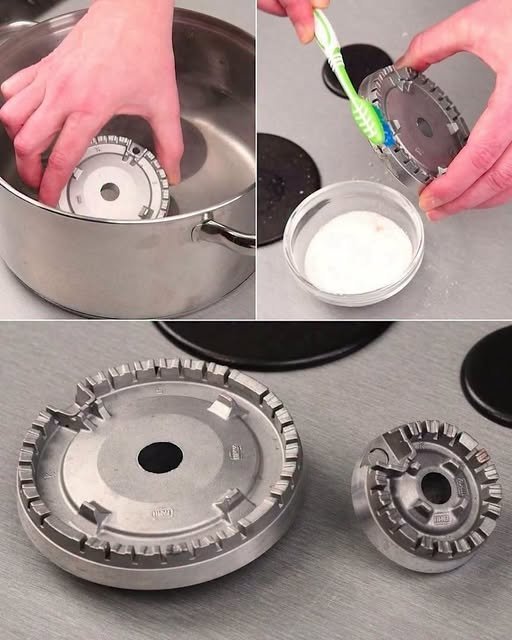
1.Remove Grates, Burner Caps, and Knobs:Prep the surface.
Take off all removable parts, including the burner grates, burner caps, and control knobs. Soak the grates and caps in a sink filled with warm, soapy water while you clean the main surface.
Verification: The stovetop surface is completely clear of loose parts and ready for treatment.
2.Mix and Apply the Cleaning Paste:Create a spreading consistency.
In a bowl, mix equal parts baking soda and hydrogen peroxide (or white vinegar) until it forms a thick, spreadable paste—similar to the consistency of frosting. Generously spread the paste over all the greasy, burnt-on spots across the stovetop surface.
Verification: The paste covers all stubborn grease stains and burnt food splatters completely without running off.
3.Let it Sit and Penetrate:Allow 20 to 30 minutes.
Leave the paste sitting on the surface for 20 to 30 minutes. During this time, the baking soda lifts grime while the peroxide or vinegar breaks down baked-on organic residues.
Verification: The paste begins to dry slightly and change color as it absorbs grease.
4.Scrub Gently and Wipe Clean:Use a non-scratch pad.
Using a damp, non-scratch sponge or microfiber cloth, gently scrub the stovetop in circular motions, paying extra attention to stubborn burnt rings around the burners. Wipe away the loosened grime and paste with a clean, damp cloth.
Verification: All residue, grit, and loosened grease are completely wiped away, leaving no chalky film behind.
5.Dry and Polish:Prevent water spots.
Buff the entire stovetop surface dry with a clean microfiber cloth. For stainless steel surfaces, buffing in the direction of the metal grain will give it a streak-free, mirror-like shine. Replace your clean, dry grates and knobs.
Verification: The surface is completely dry, shiny, and free of streaks or smudged fingerprints.