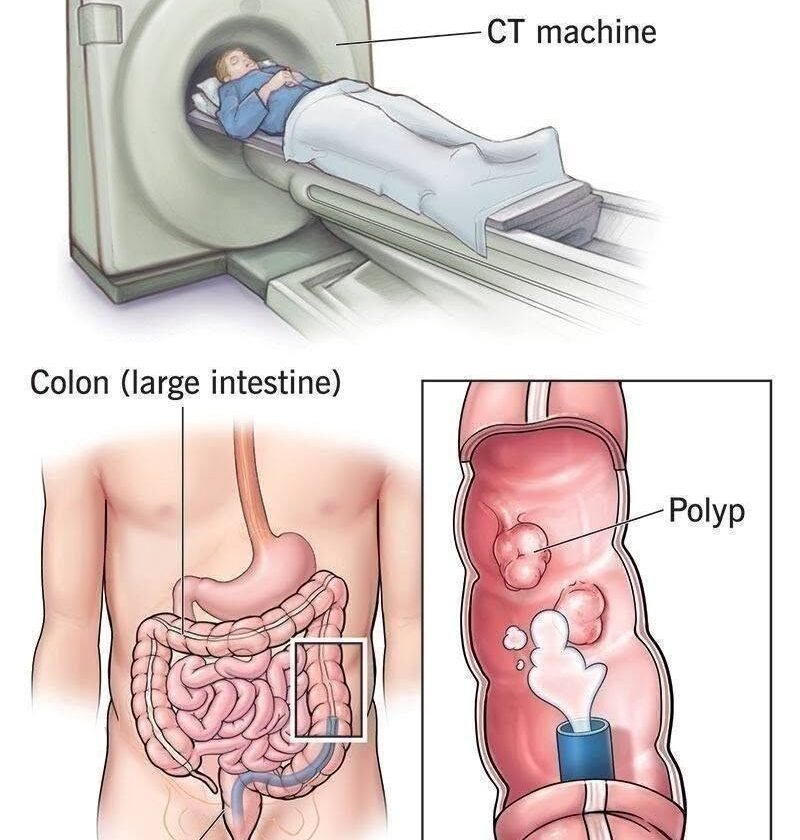
“New method: colonoscopy will no longer be invasive” — what does it mean?
This headline is misleading if it suggests traditional colonoscopy has been replaced. There are newer ways to examine or screen the colon without inserting a conventional flexible colonoscope, but each has limitations.
The main alternatives
- 💊 Colon capsule endoscopy: You swallow a small capsule containing cameras that take images as it travels through the digestive tract. There is no traditional scope, but bowel preparation is still generally required. If a suspicious polyp is found, a conventional colonoscopy may still be needed for removal or biopsy.
- 🖥️ CT colonography (virtual colonoscopy): CT imaging creates pictures of the colon. It avoids inserting a camera through the entire colon, but bowel preparation is still necessary and a small tube is typically placed in the rectum to inflate the colon.
- 🧪 Stool-based screening: Tests such as FIT detect hidden blood in stool and can screen for colorectal cancer without an invasive procedure. However, they don’t directly inspect the colon, and a positive result generally requires follow-up colonoscopy.
Why conventional colonoscopy still matters
A standard colonoscopy does more than look for abnormalities. Doctors can remove polyps, take biopsies, and sometimes treat lesions during the same procedure. That’s why non-invasive or minimally invasive tests aren’t simply interchangeable with colonoscopy.
Bottom line: The future of colorectal screening is becoming less invasive, but it isn’t accurate to say that colonoscopy has suddenly become unnecessary. The best screening method depends on your age, risk factors, previous findings, symptoms, and local medical guidance.
If you have part 2 of the article/headline, send it to me—I can identify exactly what “new method” it is describing and explain whether the claim is legitimate.