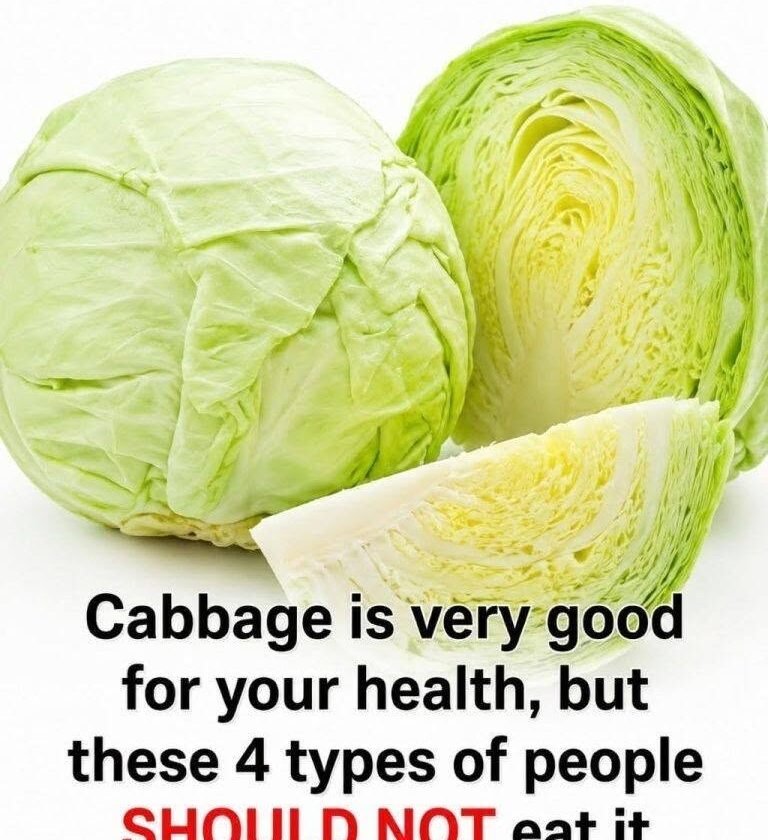
While cabbage is packed with essential nutrients, vitamins, and fiber, certain health conditions or medications mean some people should limit or avoid eating it—especially when raw.
The four main groups of people who should exercise caution or avoid cabbage include:
—
### 1. People with Hypothyroidism (Underactive Thyroid)
* **Why:** Cabbage contains compounds called **goitrogens**. When eaten raw and in large quantities, goitrogens can interfere with the body’s ability to absorb iodine and hinder the thyroid gland from producing vital hormones.
* **Safe alternative:** Cooking cabbage significantly reduces its goitrogenic activity, and keeping consumption to modest, occasional portions is generally well-tolerated.
### 2. People Taking Blood Thinners (e.g., Warfarin)
* **Why:** Cabbage is exceptionally rich in **Vitamin K**, which plays a major role in blood clotting. Sudden or large increases in Vitamin K intake can counteract and reduce the effectiveness of anticoagulant medications like Warfarin, increasing the risk of blood clots.
* **Safe alternative:** You do not necessarily have to eliminate cabbage completely, but consistency is key. Keep your portion sizes steady day-to-day and coordinate with your doctor or dietitian.
### 3. People with IBS, Chronic Bloating, or Sensitive Stomachs
* **Why:** Cabbage contains **raffinose**, a complex sugar/fiber that humans lack the specific enzyme to fully break down in the upper gut. When it reaches the lower intestine, gut bacteria ferment it, which frequently triggers stubborn gas, abdominal cramps, bloating, and diarrhea—particularly in people with Irritable Bowel Syndrome (IBS) or SIBO.
* **Safe alternative:** Thoroughly cooking, steaming, or fermenting cabbage breaks down some of these complex fibers, making it much easier on the digestive tract.
### 4. Individuals with Active Stomach Ulcers or Recent Gut Surgery
* **Why:** Raw cruciferous vegetables are physically coarse, high in tough insoluble fiber, and harder to digest. For anyone experiencing an active flare-up of gastritis, stomach ulcers, or recovering from gastrointestinal surgery, raw cabbage can irritate the delicate lining of the digestive tract and cause sharp pain.
* **Safe alternative:** Doctors usually recommend sticking to a low-residue, easily digestible diet during acute flare-ups or healing phases until the gastrointestinal tract has fully recovered.
—
*Note: If you fall into one of these categories and love cabbage, consult your healthcare provider or a registered dietitian to determine safe preparation methods and portion sizes for your specific needs.*