Natural and Powerful Homemade Weed Control
If you want to control weeds without conventional herbicides, there are several effective approaches—but “natural” does not automatically mean harmless. In particular, popular vinegar-and-salt recipes can damage desirable plants and soil, and concentrated vinegar can seriously injure skin and eyes.
U
UConn Extension
+1
1. Start with the safest method: pull and mulch
For garden beds, the most reliable low-risk approach is often hand-pulling, hoeing, and mulching. Remove weeds while they’re young and try to remove the roots. Then cover bare soil with organic mulch to reduce new weed emergence. Extension specialists generally recommend these methods over homemade pesticide mixtures.
A
Ask Extension
+1
2. Boiling water for cracks and hard surfaces
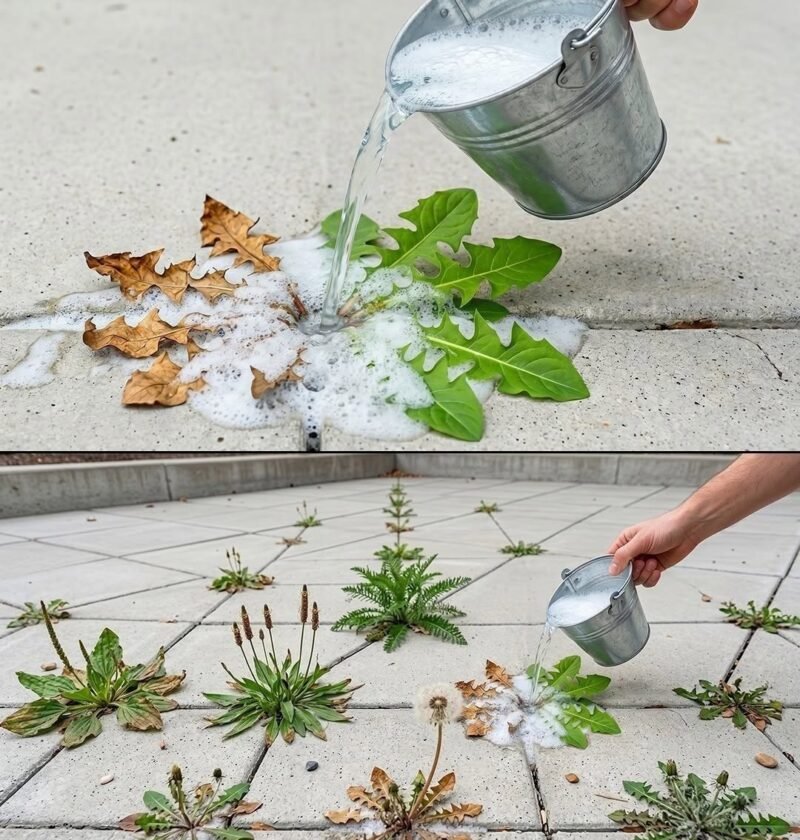
For weeds growing between paving stones, cracks in paths, or other areas where you don’t want vegetation, carefully pouring boiling water directly onto the weed can kill young plants.
It isn’t a permanent solution for deep-rooted perennial weeds, which may regrow from their roots.
A
Ask Extension
Be extremely careful—the water can cause serious burns.
3. Vinegar can work—but know its limitations
Vinegar contains acetic acid, which damages plant tissue on contact. Household vinegar is generally only around 4–6% acetic acid and works best against very small, young annual weeds. Established perennial weeds can recover because vinegar doesn’t travel down into the root system.
I
Illinois Extension
+1
Importantly, vinegar is non-selective: it can injure flowers, vegetables, grass and other plants it touches.
4. Skip the salt-heavy recipes
The famous recipe combining vinegar + salt + dish soap may kill vegetation, but salt can accumulate in soil and interfere with the growth of plants you actually want. University extension experts specifically advise against using salt as a homemade herbicide.
U
UConn Extension
+1
So if your goal is a healthy vegetable or flower garden, don’t use salt to sterilize the soil.
5. What about stronger “horticultural vinegar”?
Products containing 10–20% or more acetic acid can provide stronger contact weed control, particularly against young annual weeds. But this is not the same as ordinary kitchen vinegar. Concentrated acetic acid can cause severe skin burns and permanent eye damage.
U
University of Maryland Extension
+1
If you choose such a product, use one specifically labeled for weed control and follow its safety instructions rather than improvising a homemade concentration.
A better natural strategy
For most home gardens:
Pull young weeds → remove the roots → mulch exposed soil → repeat regularly.
For weeds in sidewalks or gravel, targeted methods such as boiling water or an appropriately labeled weed-control product can be more practical.
Bottom line: There isn’t a magic homemade mixture that permanently kills every weed without affecting anything else. Vinegar can provide quick top-kill, but it usually doesn’t eliminate established roots. For long-term control, prevention, mulching and repeated physical removal are often safer and more sustainable.
U
University of Maryland Extension
+1
U
A
I
Sources