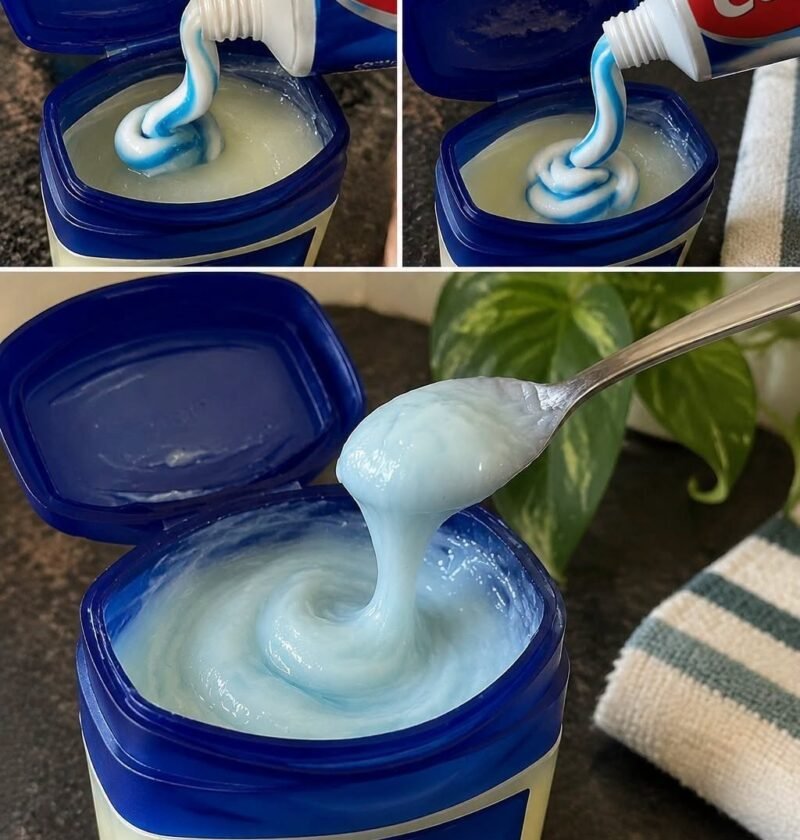
Viral DIY beauty hacks often love to promise that combining unexpected household items—like mixing toothpaste and Vaseline—creates a miraculous overnight fix for everything from clearing acne and smoothing wrinkles to erasing dark spots.
While people sometimes report feeling a temporary tightening or smoothing effect on their skin from such mixtures, the clinical reality behind combining these two specific products is quite different. Here is a breakdown of why this viral combination is actually a recipe for skin irritation rather than an effective skincare treatment.
What Each Ingredient Does on Its Own
-
Toothpaste: Toothpastes are formulated for hard tooth enamel, not delicate facial skin. They typically contain abrasive agents (like baking soda or silica), detergents (like sodium lauryl sulfate), alcohol, menthol, and sometimes hydrogen peroxide or essential oils. While intended to scrub plaque off teeth, these ingredients are intensely drying and disruptive to the skin barrier.
-
Vaseline (Petroleum Jelly): Vaseline is a heavy, occlusive emollient made of purified petrolatum. Its primary job is to sit on top of the skin, locking in existing moisture and protecting a compromised skin barrier from external moisture loss.
What Happens When You Mix Them (The Risks)
When you combine harsh, drying, and potentially irritating chemicals from toothpaste with an occlusive barrier like Vaseline, you create a counterproductive mixture:
-
Trapping Irritants Against the Skin: Vaseline creates an airtight seal over the skin. If you mix toothpaste into it, you are essentially sealing harsh detergents, mint extracts, abrasives, and drying agents directly against your skin barrier for hours, dramatically increasing the risk of contact dermatitis, redness, chemical burns, or peeling.
-
Aggravating Acne and Blemishes: A common viral claim is that this mixture shrinks pimples overnight. In reality, the heavy petroleum jelly can trap bacteria and sebum inside pores, while the irritating ingredients in toothpaste can inflame the blemish further, often making breakouts worse or leaving behind post-inflammatory hyperpigmentation.
-
Severe Eye and Lip Sensitivity: The skin on your lips and around your eyes is exceptionally thin and sensitive. Applying minty, chemically active toothpaste near these areas can easily trigger burning, stinging, and allergic reactions.
The Takeaway
While the internet loves a cheap, DIY kitchen shortcut, your facial skin requires formulations with balanced pH levels and tested safety profiles. If you are looking to lock in moisture, plain Vaseline (or a gentle, fragrance-free moisturizer) is wonderful—just leave the toothpaste where it belongs: on your toothbrush!