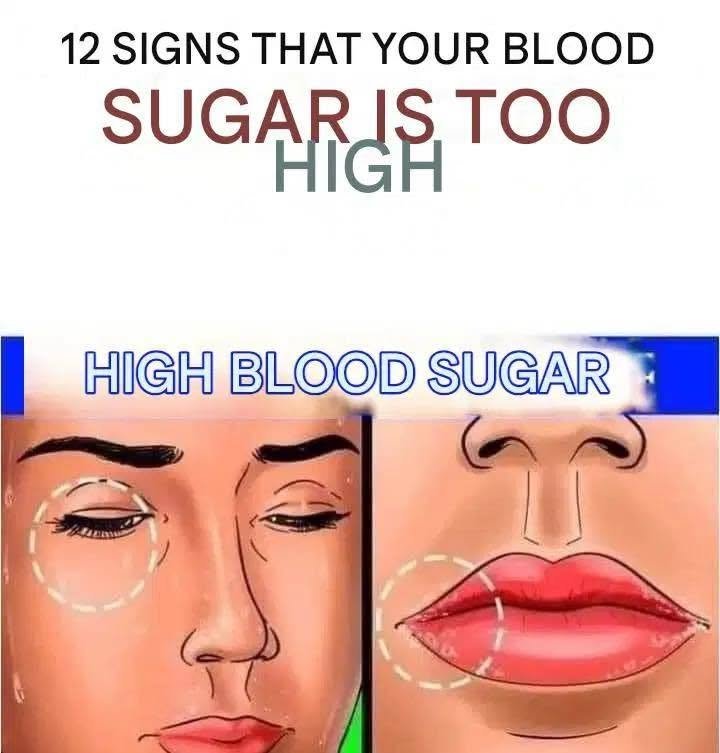
The headline “The High-Sugar Alert: Recognizing the 12 Key Symptoms Your Body Is Showing You” refers to possible symptoms of hyperglycemia (high blood glucose). However, symptoms alone cannot diagnose diabetes, and some people with type 2 diabetes have few or no symptoms. A blood test is needed for diagnosis. (nhs.uk)
12 possible signs associated with high blood sugar
- Increased thirst
- Frequent urination, sometimes especially at night
- Unusual tiredness or weakness
- Blurred vision
- Unexplained weight loss
- Increased hunger
- Headaches
- Slow-healing cuts or wounds
- Repeated infections, including some fungal infections
- Tingling or numbness in the hands or feet, particularly when high glucose has been present for a long time
- Dry mouth or itchy/dry skin
- Sexual or reproductive problems can occur with diabetes-related complications. (nhs.uk)
Not all of these are specific to high blood sugar. For example, tiredness, headaches and dry mouth have many possible causes.
When to get tested
If you’re repeatedly experiencing thirst, frequent urination, unexplained weight loss, fatigue or blurred vision, arrange a blood-glucose evaluation. Type 2 diabetes can develop gradually, so waiting for severe symptoms isn’t a good screening strategy. (nhs.uk)
🚨 Know the emergency signs
Very high blood sugar can sometimes lead to diabetic ketoacidosis (DKA) or hyperosmolar hyperglycemic state (HHS). Warning signs include severe thirst/urination together with nausea or vomiting, confusion, marked drowsiness, or shortness of breath. These conditions can be life-threatening and require urgent medical treatment. (nhs.uk)
Bottom line: Don’t try to diagnose diabetes from a “12 symptoms” checklist. If you’re concerned, a blood glucose test and/or HbA1c provides much more useful information than symptoms alone.