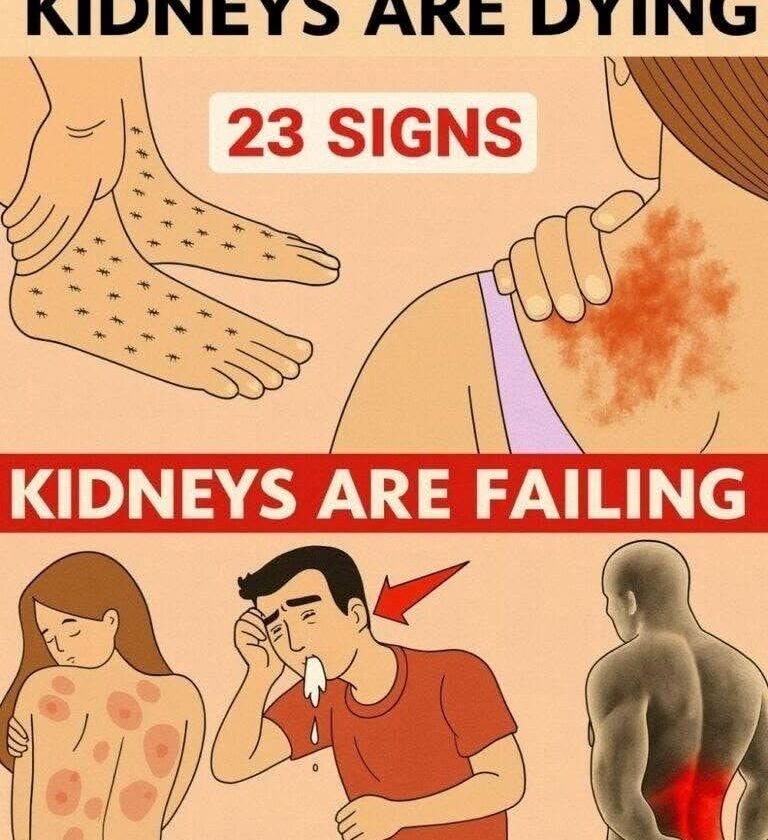
Viral health listicles love to use exaggerated, attention-grabbing hooks like “23 Strange Signs Your Kidneys Might Be in Trouble” to drive panic and clicks.
While chronic kidney disease (CKD) is a serious condition that affects millions, the reality is that the kidneys are remarkably resilient organs. In the early stages, kidney disease is often called a “silent condition” because it typically produces zero noticeable symptoms.
When kidney function does decline significantly, the body doesn’t usually exhibit 23 quirky, bizarre signs; instead, it triggers a specific set of predictable physiological warning signals due to fluid retention, waste buildup, and electrolyte imbalances.
The Reality: What Actual Kidney Trouble Looks Like
Instead of counting dozens of random, vague quirks, medical professionals look for clear, persistent clinical signs that indicate the kidneys are struggling to filter waste and balance fluids:
-
Persistent Swelling (Edema):
-
Why it happens: When kidneys fail to remove extra sodium and fluid efficiently, fluid builds up in the body, leading to swelling in your feet, ankles, legs, hands, or around the eyes (periorbital edema).
-
-
Changes in Urination Patterns:
-
Why it happens: This can include needing to get up multiple times during the night to urinate (nocturia), urine that appears foamy or bubbly (due to protein leaking into the urine, called proteinuria), or blood in the urine.
-
-
Chronic Fatigue and Weakness:
-
Why it happens: Healthy kidneys produce a hormone called EPO (erythropoietin), which tells your body to make red blood cells. When kidneys are damaged, they make less EPO, leading to anemia, persistent exhaustion, and weakness.
-
-
Itchy, Dry Skin:
-
Why it happens: When kidneys can no longer keep the right balance of minerals and nutrients in your blood, a buildup of phosphorus can lead to severe, deep-seated skin itching.
-
-
Unexplained Nausea, Vomiting, or Loss of Appetite:
-
Why it happens: A severe buildup of waste products in the blood (uremia) can profoundly impact the digestive system, causing nausea, a metallic taste in the mouth, or an aversion to eating meat.
-
Why Viral Health Lists Can Be Misleading
-
Confusing Unrelated Symptoms: Viral articles often lump together common, harmless issues—like puffy eyes from a bad night’s sleep, muscle cramps after a hard workout, or dry skin in the winter—and frame them as terrifying kidney warnings.
-
Creating Health Anxiety: By listing dozens of vague “signs,” these headlines cause unnecessary worry over everyday bodily quirks.
How to Actually Monitor Your Kidney Health
Because early kidney disease has no symptoms, you cannot diagnose it by scanning a list of strange physical quirks. Instead, monitoring relies on two simple, objective medical tests:
-
A Routine Blood Test (eGFR): Measures how well your kidneys are filtering your blood, expressed as your estimated glomerular filtration rate.
-
A Urine Test (ACR): Checks for microscopic amounts of protein (albumin) in your urine, which is often the earliest warning sign of kidney stress.
If you have risk factors like high blood pressure, diabetes, or a family history of kidney disease, a routine annual checkup with your doctor provides real answers—far better than any viral listicle!