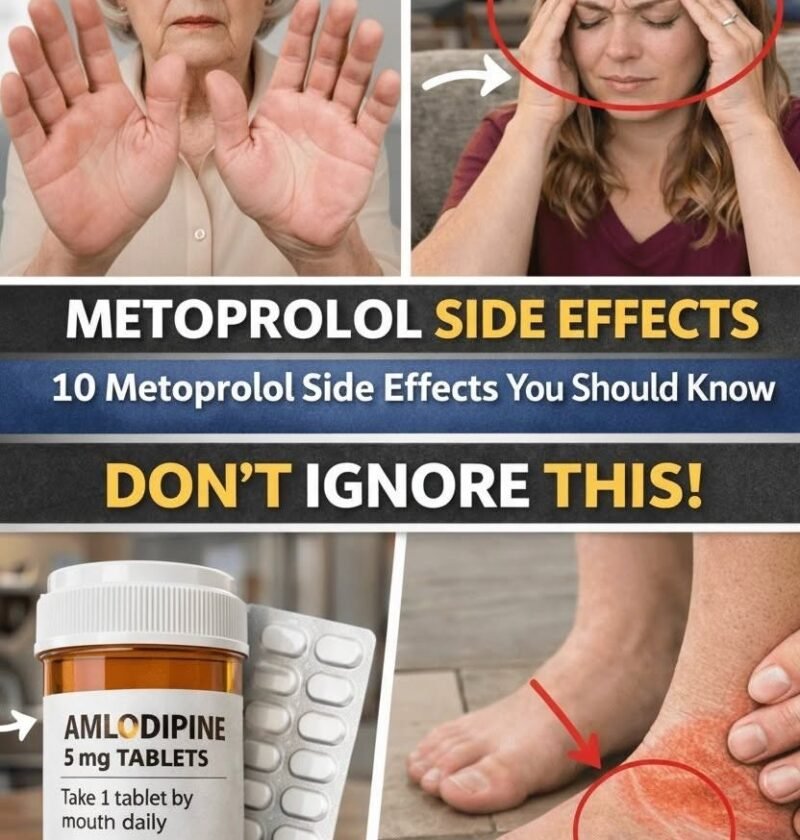
Metoprolol (commonly known by brand names like Lopressor or Toprol-XL) is a beta-blocker widely prescribed for high blood pressure, chest pain (angina), heart failure, and heart rate control. While doctors frequently discuss standard warnings like fatigue or dizziness, patients are often caught off guard by a range of unexpected or less-publicized physical and psychological side effects.
1. The “Invisible” Low Blood Sugar Trap (Hypoglycemia Masking)
-
What happens: Beta-blockers block adrenaline receptors. Adrenaline is the chemical that normally triggers warning signs when your blood sugar plummets—causing shakiness, a racing heart, and intense sweating.
-
The Catch: If you take insulin or diabetes medications, metoprolol can mask these emergency signals, leaving you with only confusion, dizziness, or sudden fatigue, which can dangerously delay treatment for low blood sugar.
2. Bizarre, Vivid Dreams and Nightmares
-
What happens: Because metoprolol easily crosses the blood-brain barrier (especially lipid-soluble forms like metoprolol tartrate), it affects central nervous system receptors.
-
The Catch: Many patients report an abrupt onset of intensely vivid, cinematic, or frightening nightmares that can severely disrupt sleep architecture and leave them feeling mentally drained upon waking.
3. Persistent Cold Hands and Feet (Raynaud-like Symptoms)
-
What happens: By blocking beta-receptors, the drug prevents blood vessels from dilating properly and reduces the force of heart contractions, shunting blood away from your extremities to protect core organs.
-
The Catch: You may experience chronically ice-cold fingers and toes, numbness, or even a bluish tint in cold weather—side effects that are frequently mistaken for poor circulation or underlying arthritis.
4. “Beta-Blocker Blues” (Subtle, Deep Depression)
-
What happens: Because the drug dampens sympathetic nervous system activity, it can chemically alter mood-regulating pathways.
-
The Catch: Patients often do not connect a gradual slide into apathy, emotional flatness, loss of interest in hobbies, or clinical depression to a heart medication they assume is purely physical.
5. Silent Sexual Dysfunction
-
What happens: Reduced blood flow to the periphery, combined with lowered cardiovascular output and central nervous system dampening, takes a heavy toll on sexual health.
-
The Catch: Both men and women frequently experience an unmentioned decline in libido, difficulty achieving arousal, or erectile dysfunction, which often leads patients to quietly stop taking the medication without telling their doctor.
6. Sudden, Unexplained Weight Gain
-
What happens: Metoprolol slows down your overall basal metabolic rate and can cause mild fluid retention as the body adjusts to lower blood pressure and cardiac output.
-
The Catch: Patients are often surprised to see steady, unexplained weight gain or puffy hands and feet even when they haven’t changed their diet or exercise habits.
7. Worsening Asthma or Unexplained “Air Hunger”
-
What happens: Even though cardioselective beta-blockers primarily target the heart, they can still bind to beta-2 receptors in the lungs at higher doses, causing airways to constrict.
-
The Catch: If you have mild or undiagnosed asthma or chronic bronchitis, metoprolol can trigger sudden shortness of breath, wheezing, or a tight chest that mimics a worsening pulmonary condition.
8. Cognitive “Brain Fog” and Short-Term Memory Blips
-
What happens: Altering neurotransmitter activity in the brain can occasionally impair executive function.
-
The Catch: Patients may struggle with word-finding, experience minor short-term memory lapses, or feel a persistent mental cloudiness that makes concentration difficult.
9. Hair Thinning (Alopecia)
-
What happens: Though relatively rare, beta-blockers can occasionally disrupt the normal hair growth cycle, pushing follicles into a resting phase prematurely.
-
The Catch: Noticeable hair shedding or thinning typically begins several months after starting the medication, catching patients completely off guard.
10. The Dangerous “Rebound” Effect (If Stopped Abruptly)
-
What happens: Your body up-regulates (creates more) beta-receptors over time to compensate for the ones blocked by the drug.
-
The Catch: If you stop taking metoprolol suddenly, a massive flood of adrenaline hits those excess receptors. This can trigger a dangerous rebound crisis—causing a severe spike in blood pressure, a racing heart, dangerous arrhythmias, or even a heart attack.
Crucial Reminder: Never adjust your dose or stop taking metoprolol abruptly due to side effects without speaking to your physician. If you are experiencing concerning symptoms, a doctor can safely manage a taper or explore alternative cardiovascular medications