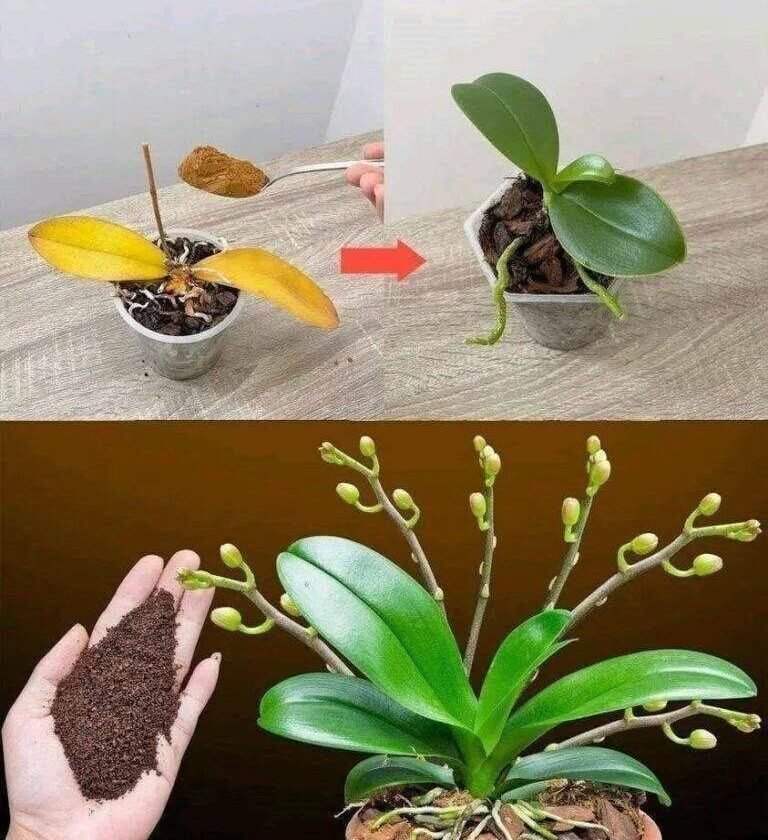
If you’re referring to the gardening claim “Just a teaspoon and your orchid suddenly blooms with lots of flowers,” be skeptical of any recipe promising miraculous flowering from a single household ingredient.
What actually encourages orchids to bloom
- Bright, indirect light — insufficient light is one of the most common reasons an orchid won’t flower.
- Correct watering — water thoroughly, then allow the growing medium to approach dryness before watering again. Don’t leave the roots sitting in stagnant water.
- Good drainage and orchid potting mix — most common orchids, such as Phalaenopsis, need plenty of air around their roots.
- Appropriate fertilizer — a balanced orchid fertilizer used according to its label can provide nutrients needed for growth and flowering.
- Temperature changes — for many Phalaenopsis orchids, slightly cooler nighttime temperatures can help trigger flower spikes.
- Patience — flowering is seasonal and depends on the orchid’s species, age, health, light, and growing conditions.
Be careful with “secret teaspoon” remedies
Using concentrated sugar, baking soda, vinegar, cinnamon, or other kitchen ingredients directly on roots or potting media can damage the plant or encourage other problems. More fertilizer is also not better—excess salts can burn orchid roots.
If you tell me which orchid you have (for example, Phalaenopsis) and what it looks like now, I can give you a simple step-by-step method to encourage new flower spikes.