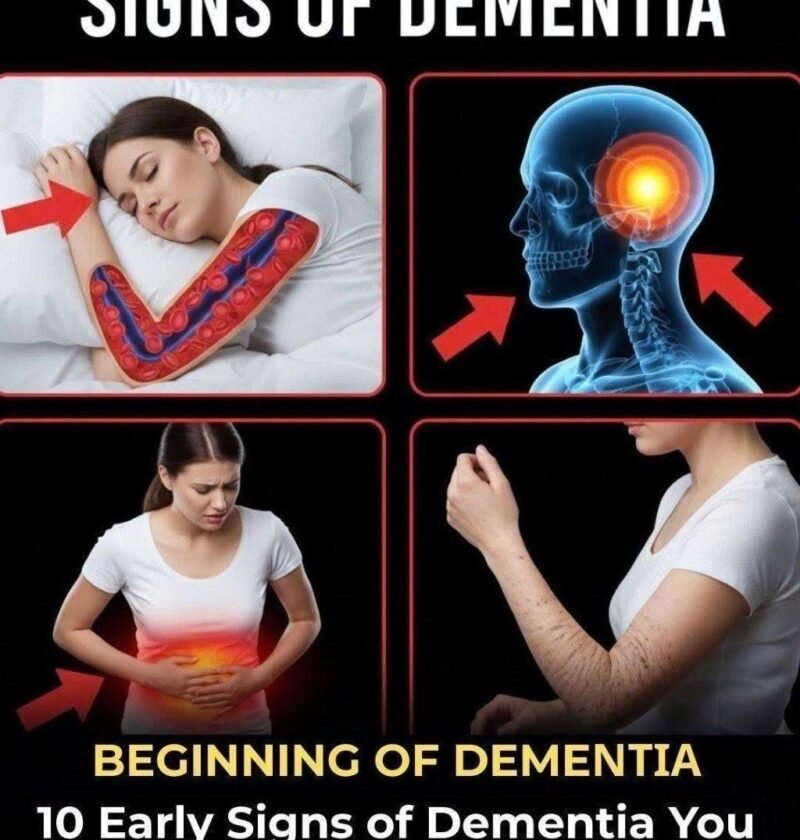
🧠 10 Early Signs of Dementia You Should Never Ignore
Occasional forgetfulness is common, and one symptom by itself doesn’t mean someone has dementia. What matters is a persistent change that interferes with everyday life or represents a clear decline from the person’s previous abilities.
10 signs to watch for
Memory loss that disrupts daily life — repeatedly forgetting recently learned information, conversations, or appointments.
Difficulty with familiar tasks — struggling with cooking, using appliances, managing bills, or other activities that were previously routine.
Problems finding words or following conversations — frequently losing track of what someone is saying or having increasing difficulty expressing thoughts.
Getting confused about time or place — losing track of dates, seasons, or where they are.
Difficulty judging distances or navigating — trouble reading a clock, judging steps, recognizing familiar routes, or judging space.
Misplacing things in unusual places — and being unable to retrace their steps to find them.
Poorer judgment or decision-making — such as unusual financial decisions or neglecting important responsibilities.
Withdrawal from work or social activities — especially when activities that were once enjoyable become difficult or confusing.
Noticeable changes in mood or personality — increased anxiety, suspicion, irritability, apathy, or unusual behavior.
Increasing difficulty planning or organizing — trouble following a familiar recipe, managing finances, keeping appointments, or completing multistep tasks.
⚠️ Don’t assume every memory problem is dementia
Memory and concentration can also be affected by poor sleep, depression, anxiety, medication side effects, vitamin deficiencies, thyroid problems, infections, hearing/vision problems, and other treatable conditions.
If these changes are persistent or worsening, arrange a medical assessment. Sudden confusion or a sudden change in mental status is different—it can be delirium or a medical emergency and needs prompt evaluation.
Early assessment can help identify treatable causes and, when dementia is present, provide an opportunity for appropriate treatment, planning, and support.