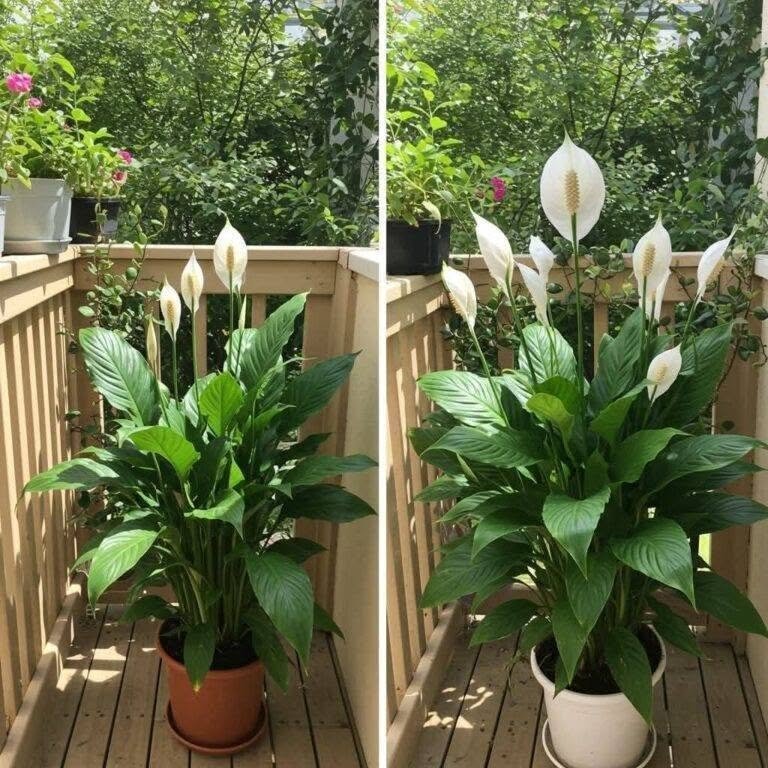
If you want to turn that into a detailed, engaging gardening post, here’s a polished version:
🌿🌸 JUST 1 CUP CAN HELP YOUR PEACE LILY BLOOM LIKE CRAZY — EVEN THE SAD-LOOKING ONES! 🌸🌿
Have a peace lily that looks tired, droopy, or refuses to flower? Before giving up on it, check the basics. Peace lilies can recover remarkably well when their growing conditions are corrected.
And while there’s no magic “one-cup” liquid that guarantees flowers, one cup of properly applied water can be exactly what a thirsty peace lily needs. 💧
Here’s how to do it properly:
💧 1. Check the soil first
Don’t automatically pour a cup of water onto your plant.
Push your finger about 2–3 cm into the soil. If the surface and upper layer feel dry, your peace lily is likely ready for watering.
If the soil is still damp, wait.
🌱 2. Water slowly
Pour water evenly around the surface of the soil rather than dumping it all in one spot.
For a small-to-medium peace lily, a cup may be enough, but the correct amount depends on the size of the pot and how dry the soil is.
The goal is to moisten the root zone without leaving the plant sitting in water.
🪴 3. Make sure the pot drains
This is one of the biggest secrets to keeping a peace lily healthy.
The container should have drainage holes. If water collects at the bottom and the roots remain constantly wet, the plant can develop root problems.
After watering, empty excess water from the saucer or decorative outer pot.
☀️ 4. Give it bright, indirect light
A peace lily can survive in relatively low light, but flowering usually improves when it receives bright, indirect light.
Place it near a bright window where it gets plenty of light without harsh, scorching direct sun for hours.
🌸 5. Don’t mistake every problem for hunger
A peace lily that isn’t blooming doesn’t necessarily need fertilizer.
Poor light, inconsistent watering, an unsuitable potting mix, root problems, or simply being too young can all contribute to a lack of flowers.
Fix the growing conditions first.
🌿 6. Feed lightly during active growth
If the plant is healthy and actively growing, an appropriate houseplant fertilizer can provide nutrients needed for continued growth and flowering.
Follow the fertilizer label carefully. More fertilizer does not mean more flowers.
Too much can damage the roots and cause problems.
✂️ 7. Remove damaged leaves and old flowers
Cut away completely brown or dead leaves with clean scissors.
When a flower has finished, remove the spent flower stalk near its base. This keeps the plant looking tidy and allows it to focus its energy on new growth.
🌱 8. Give the roots room—but don’t overpot
Peace lilies don’t necessarily need a huge container.