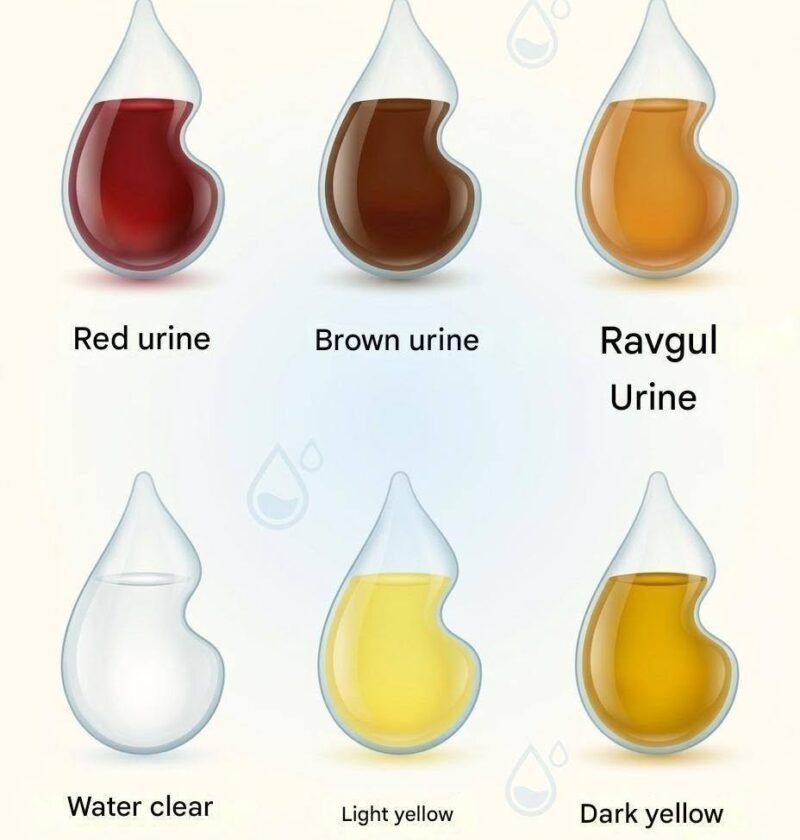
What Does the Color of Your Urine Say About Your Health?
Your urine can change color for many reasons. Hydration, foods, vitamins, and medications can all affect it, so color alone can’t tell you whether you’re healthy or sick.
💛 Pale Yellow
Usually normal and often consistent with good hydration.
💧 Very Clear
Often means you’ve been drinking plenty of fluids. Constantly forcing large amounts of water isn’t necessary and can sometimes be harmful.
🟡 Dark Yellow
Often occurs when urine is more concentrated, such as when you haven’t had enough fluids.
🟠 Orange
Can occur with dehydration or certain medications and supplements. Persistent orange urine should be discussed with a healthcare professional.
🔴 Pink or Red
Beets and some other foods can change urine color, but red or pink urine can also mean blood is present. If you can’t clearly explain the color by something you’ve eaten or taken, get it checked.
🟤 Brown or Cola-Colored
Very concentrated urine can look dark, but brown urine can also be associated with certain medicines or problems involving the liver, kidneys, or muscles. Persistent brown urine warrants medical attention.
☁️ Cloudy or Milky
Cloudiness can sometimes occur with a urinary tract infection, kidney stones, or other urinary conditions—especially when accompanied by burning, pain, fever, or frequent urination.
🟢 Green or 🔵 Blue
Unusual colors can occasionally result from food dyes, medications, or medical dyes used during testing. Some infections can also cause unusual discoloration.
When Should You Get Medical Advice?
Contact a healthcare professional if your urine remains unusually colored without an obvious explanation, or if you have blood in the urine, pain, fever, burning, difficulty urinating, or other new symptoms.
🚨 Seek urgent care for severe pain, inability to urinate, heavy blood or clots in the urine, or severe illness.