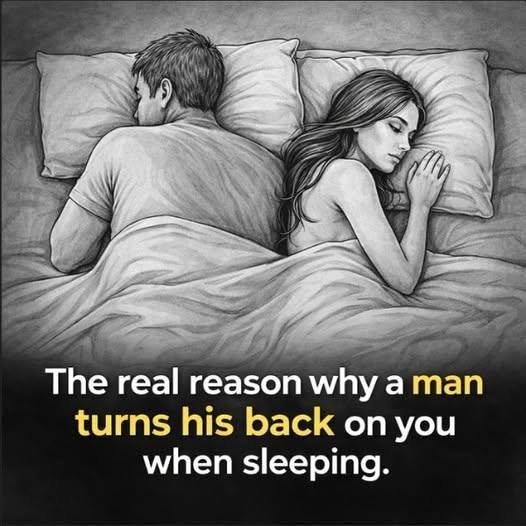
The headline “If your partner turns their back on you while sleeping, it means…” is a classic relationship anxiety bait. It is designed to prey on late-night insecurities, suggesting that a completely normal, comfortable sleeping position is actually a secret psychological indicator of emotional distance, conflict, or a failing relationship.
In reality, sleep science and body language experts agree: how you position your body while unconscious has almost nothing to do with the health of your relationship and everything to do with comfort and temperature regulation.
Let’s separate internet relationship myths from the physical reality of how humans sleep.
Why People Turn Their Backs While Sleeping
When you drift off to sleep, your body transitions from conscious control to automatic comfort-seeking. Turning your back to your partner is almost always driven by simple physical mechanics rather than emotional detachment:
-
Temperature Regulation: Humans radiate a significant amount of body heat. Cuddling or facing each other traps body heat between you, which quickly raises your skin temperature. Turning away allows your body to vent heat and maintain a comfortable core temperature throughout the night for deeper sleep.
-
Spinal Alignment and Ergonomics: Most side sleepers find it awkward or physically straining to face directly toward another person while keeping their spine and neck neutral. Turning your back allows you to comfortably bend your knees, support your upper body, and relax your shoulders without twisting your spine.
-
Preventing Disruptions: Facing away from each other means your individual movements—such as rolling over, shifting a blanket, or breathing rhythmically—won’t directly disturb or wake your partner.
What Relationship Studies Actually Say
Relationship researchers (such as those from the University of Hertfordshire who studied couple sleeping positions) have found that the distance between partners matters far more than the direction they are facing:
-
The “Contact” Factor: Couples who sleep touching each other (or close together) do report high levels of relationship satisfaction. However, sleeping back-to-back while still touching (such as backs or heels lightly brushing) is just as common among happy, secure couples.
-
The Independent Sleeper: Many long-term, deeply committed couples prefer to sleep facing opposite directions with space between them simply because it results in a better, uninterrupted night’s sleep.
The Takeaway
Turning your back on your partner at night does not mean you are turning your back on them emotionally—it usually just means you are trying to get cool, comfortable sleep. A healthy relationship is built on daytime communication, mutual respect, and trust, not on rigid physical geometry while you are fast asleep.