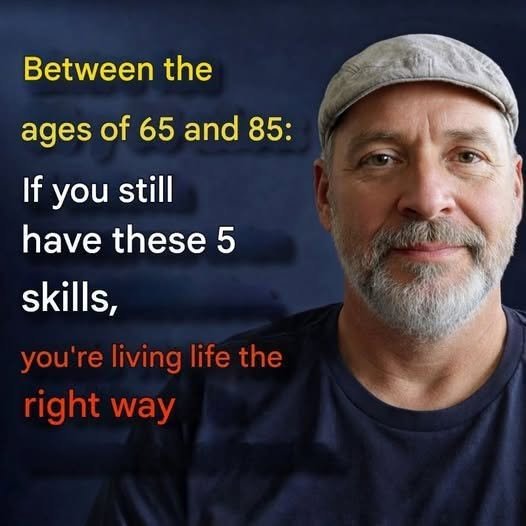
If you’re looking for the evidence behind that headline, the idea is broadly reasonable—but there isn’t a scientifically established “five-capacity test” proving that someone is aging better than most. Healthy aging is better understood as maintaining physical, cognitive, and functional abilities for as long as possible. WHO specifically defines healthy aging around maintaining functional ability, including mobility, thinking, learning, decision-making, and relationships.
5 capacities that are genuinely encouraging between 65 and 85
1. You can get up from a chair without using your hands
Being able to rise from a chair reflects lower-body strength and functional mobility. Chair-rise performance is one of the physical-function measures associated with healthy aging and longevity.
2. You can walk at a reasonably brisk, steady pace
Walking ability is a major marker of functional independence. Declining gait and mobility can make everyday activities increasingly difficult, while maintaining physical function helps preserve independence.
3. You can maintain your balance
Being able to stand and move without frequent loss of balance is important because falls become a major concern with advancing age. Balance is one of the capacities that tends to decline with age and is particularly responsive to appropriate training.
4. You still have useful muscle strength
Strength isn’t about lifting heavy weights. It’s being able to carry groceries, climb stairs, get out of a chair, open containers, and perform everyday tasks. Maintaining muscle strength and function is an important component of healthy aging.
5. You can think, learn and manage everyday decisions independently
Healthy cognitive function means more than remembering someone’s name. It includes being able to think clearly, learn, make decisions and handle everyday activities such as managing medications, finances and cooking.
The bigger picture
If you’re 65–85 and you can walk independently, rise from a chair, maintain balance, retain useful strength, and think/manage everyday life effectively, those are reassuring signs of preserved functional capacity.
But don’t turn any one ability into a pass/fail test. Healthy aging isn’t about being disease-free or matching a particular performance score. Someone can have arthritis, diabetes or another chronic condition and still age well if the condition is managed and they retain good function.
The encouraging part is that these capacities aren’t completely fixed. Regular aerobic activity, strength training and balance exercises can help preserve physical function, and cognitive and social engagement are also important. NIA recommends older adults incorporate aerobic, muscle-strengthening and balance activities as appropriate.