If you’re creating a health-awareness post, I’d avoid presenting these as signs that someone definitely has one year left. No set of symptoms can reliably predict that. A safer, medically accurate version is:
Writing
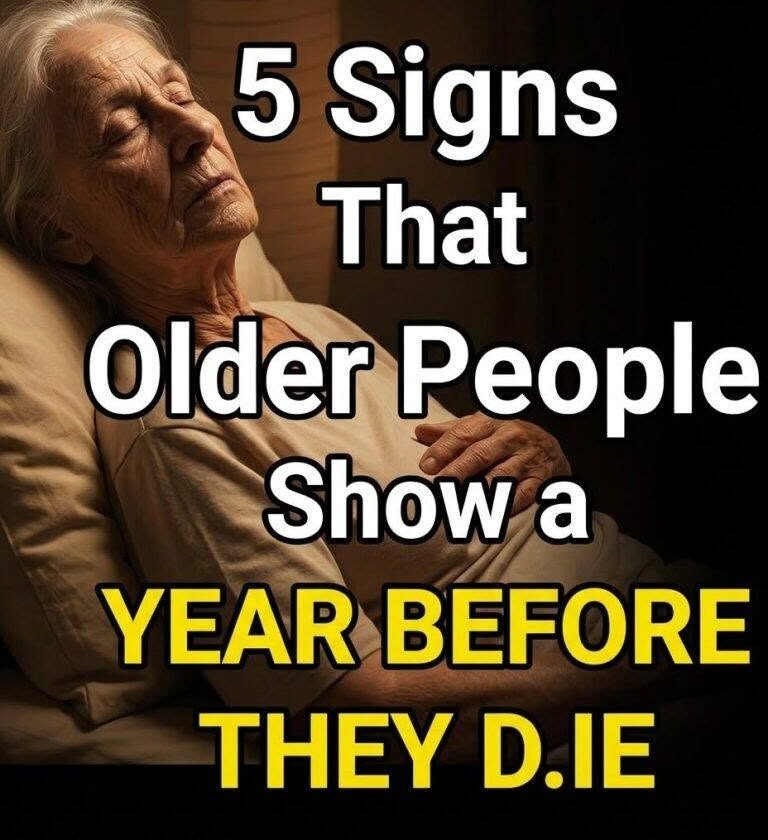
5 Signs an Elderly Person May Be Approaching the End of Life
Some older adults develop subtle changes as they become seriously ill or enter the final phase of life. These signs do not necessarily mean a person has only months or a year left, but they deserve attention—especially when several occur together.
Increasing weakness and fatigue
They may spend more time resting, have less energy, or need increasing help with everyday activities.
Reduced appetite and weight loss
Eating and drinking may gradually decrease, particularly during advanced illness.
Sleeping more
A person may become increasingly tired and spend more time asleep or less engaged with their surroundings.
Declining mobility and independence
Walking, bathing, dressing, or other routine activities may become increasingly difficult.
More frequent infections or hospitalizations
Repeated infections, worsening chronic illnesses, or frequent medical crises can indicate that overall health is becoming more fragile.
⚠️ Don’t assume these changes mean death is imminent. Many can also occur with treatable conditions such as infections, medication side effects, depression, dehydration, or nutritional problems.
If these changes are new or worsening, speak with the person’s doctor. If the person has severe breathing difficulty, sudden confusion, chest pain, loss of consciousness, or sudden weakness on one side, seek emergency medical care.
Early medical and palliative-care support can help improve comfort and quality of life.