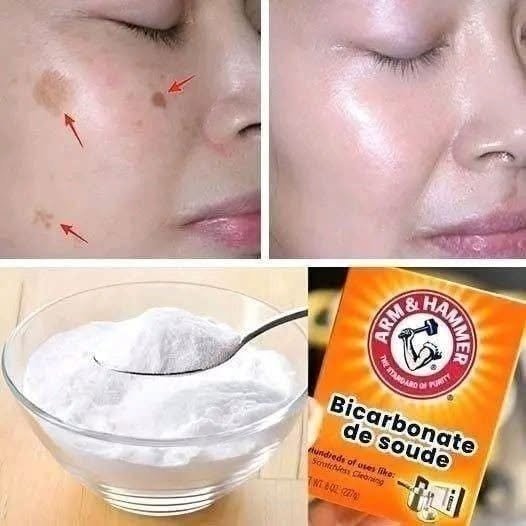
Despite what viral skincare trends and clickbait articles claim, you should not use baking soda on your face to treat dark spots, wrinkles, or dark circles.
While baking soda is an amazing natural abrasive and deodorizer for around the house, applying it to the delicate skin of your face can cause serious irritation and damage.
Why Baking Soda is Bad for Facial Skin
-
It Disrupts Your Skin’s Acid Mantle: Your skin has a natural, slightly acidic pH (usually between 4.5 and 5.5) that protects against bacteria, pollution, and moisture loss. Baking soda is highly alkaline (with a pH around 9). Using it strips away this protective barrier, leading to extreme dryness, irritation, and vulnerability to breakouts.
-
It Causes Micro-Tears: Baking soda crystals are harsh and abrasive. Scrubbing your face with it creates microscopic tears in the skin barrier, which can worsen hyperpigmentation, trigger inflammation, and accelerate signs of aging rather than smoothing wrinkles.
-
It Worsens Dark Spots and Dark Circles:
-
For dark spots, the inflammation caused by baking soda can trigger post-inflammatory hyperpigmentation, making dark spots darker.
-
For dark circles, the skin under your eyes is paper-thin and fragile. Harsh alkaline scrubs or DIY pastes will severely dry and damage this delicate area, potentially worsening discoloration or puffiness.
-
Safe, Dermatologist-Approved Alternatives
If you want to target dark spots, fine lines, or under-eye circles safely, swap the baking soda for proven ingredients:
-
For Dark Spots: Look for serums containing Vitamin C, Niacinamide, Alpha Arbutin, or Azelaic Acid to gently fade discoloration and brighten your complexion without stripping your skin.
-
For Wrinkles: Incorporate Retinoids (Retinol) or Peptides into your evening routine to boost collagen production and smooth fine lines safely over time.
-
For Dark Circles: Use an eye cream containing Hyaluronic Acid for hydration, or Caffeine to constrict blood vessels and temporarily reduce under-eye shadows and puffiness.
Key Takeaway: Always protect your skin barrier. When a DIY remedy sounds too harsh or too good to be true, it’s usually best to leave it in the kitchen pantry and stick to dermatologist-backed skincare.
Have you tried any other DIY skincare remedies, or are you looking for a gentle routine to help brighten up your skin?