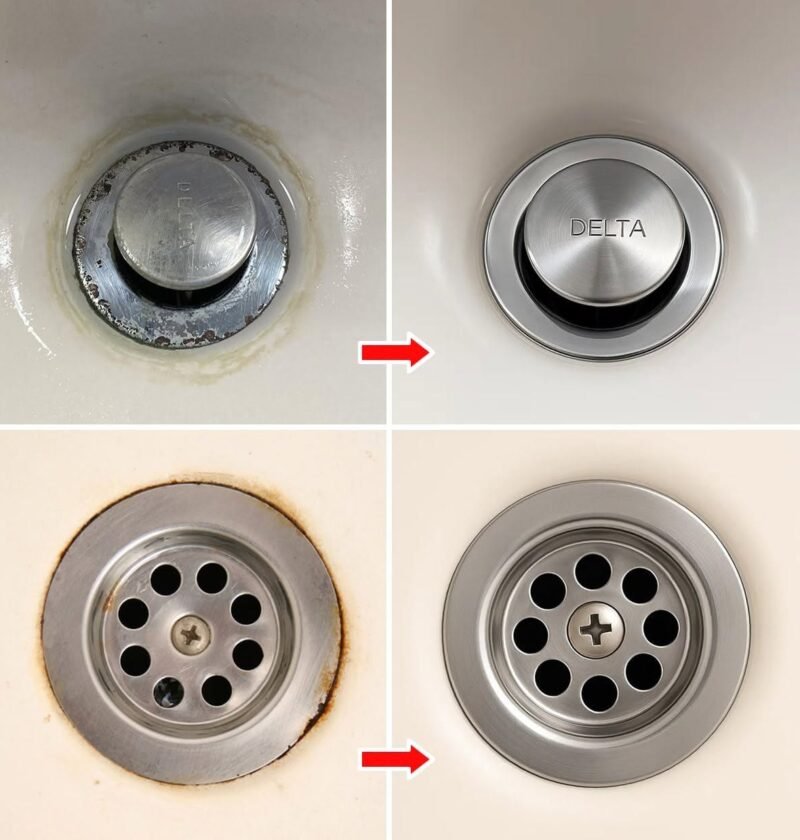
That dark, rusty, or brownish ring around the base of a faucet usually happens when standing water and soap/mineral residue get trapped along the seam—often over hard water mineral buildup, mold/mildew in damp grime, corroded/oxidized metal or deteriorated plumber’s putty/caulk, or surface staining on the sink/countertop itself.
Because viral cleaning hacks often skip surface safety, the right fix starts with matching the method to both the dark ring and the sink/faucet material (such as porcelain/ceramic, stainless steel, acrylic/composite, or natural stone).
Step 1: Identify What Kind of Dark Ring It Is
| What the Ring Looks Like | Likely Cause | Surface Caution |
| Dark gray, black, or brownish-black film along the seam | Damp soap scum + trapped moisture + mildew/biofilm or dark mineral sediment. | Avoid harsh scrubbing on soft acrylic or delicate finishes. |
| Rust-colored or reddish-brown ring | Iron/mineral deposits from water or corrosion on older/plated metal fittings. | Acidic cleaners can etch natural stone (marble, travertine, limestone) and pit damaged chrome/brass plating. |
| Gummy, cracked, or dark ring right in the gap | Old, failing plumber’s putty or silicone caulk letting water seep underneath. | Cleaning won’t fix a broken seal—the old caulk/putty needs removal and fresh sealing. |
Step 2: How to Remove It Safely
-
Start With Warm Dish Soap and a Soft Brush: Mix warm water with a few drops of dish soap, apply it around the faucet base, and gently scrub with a soft toothbrush or non-scratch nylon brush. This cuts greasy soap film and loose grime without risking damage.
-
Dissolve Mineral / Hard-Water Buildup (Only If Surface-Safe): If stubborn mineral crust remains on porcelain, stainless steel, or chrome (not natural stone), soak a paper towel or cloth in diluted white vinegar or a mild citric/descaling solution, wrap or press it around the base for 10–15 minutes, then wipe and scrub lightly. (Skip vinegar/acids on marble, granite, or stone sinks, and rinse metal thoroughly afterward.)
-
Target Stubborn Dark Marks With a Baking Soda Paste: Make a thick paste of baking soda and water and let it sit for 10–15 minutes on tough spots, then gently agitate and rinse well. Keep pressure light so you don’t dull glossy coatings or scratch softer plastics/acrylics.
-
Dry Thoroughly and Check for Leaks/Seals: Wipe the area completely dry after rinsing. If dark moisture keeps returning, look closely while running water to see if the faucet base is weeping from a worn gasket or cracked caulk line.
What to Avoid
-
Don’t Reach for Abrasive Pads or Magic Erasers First: Stiff scouring pads, steel wool, or melamine foam can leave micro-scratches on chrome, brushed finishes, acrylic, or glossy porcelain—creating tiny grooves where dark grime builds up even faster next time.
-
Don’t Mix Cleaners: Never combine bleach with vinegar, ammonia, or acid descalers, as mixing them releases hazardous gases.
If you share what the sink and faucet are made of—and whether the ring is slimy/moldy, chalky/mineral, or rusty—I can narrow down the safest exact steps.