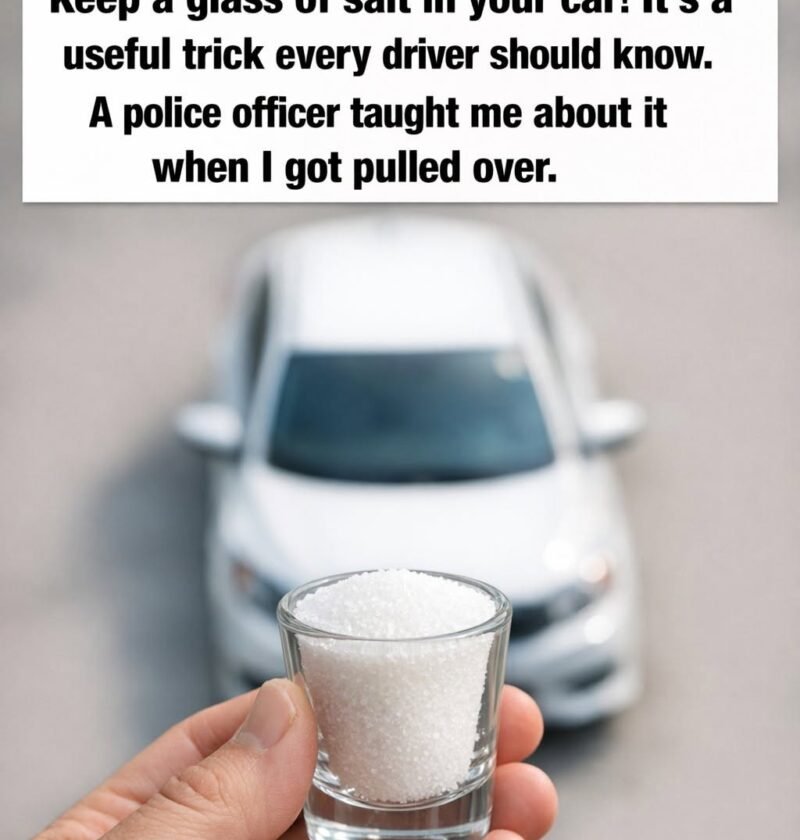
Headlines promising “Put 1 Glass of Salt in a Car: Surprising Hack Every Driver Needs to Know” turn a basic desiccant effect into an overstated miracle cure. Salt (sodium chloride) is mildly hygroscopic—meaning it can absorb a small amount of moisture from humid air—so a cup of salt left in a parked car may slightly trim localized dampness, but it will not reliably stop heavy windshield fogging, fix leaking weatherstripping, or prevent rust.
In fact, leaving an open glass of salt loose inside a vehicle comes with very real downsides: if the cup tips over on a turn, bumps a curb, or gets knocked by a bag, spilling salt onto carpets, seat tracks, or electronics creates a gritty mess and accelerates metal corrosion wherever moisture reaches it.
What a Glass of Salt Actually Does vs. What Viral Posts Claim
| Claim in Viral Car Hacks | What Happens in Reality | Practical Takeaway |
| “Eliminates foggy windshields completely” | A small glass of salt has limited moisture-holding capacity and slow air exchange in a closed cabin—especially when you breathe moist air inside or run the heater/AC. | Use your car’s defroster, A/C compressor (which dehumidifies air even with heat on), and clean interior glass instead. |
| “Prevents car rust and damp odors” | Salt pulls moisture out of the air, but salt itself accelerates rust if dissolved salt water contacts bare/scratched metal, and it doesn’t remove mildew or foul odors at the source. | Fix water leaks, dry wet floor mats, and use proper interior cleaners or reusable silica/clay moisture absorbers if needed. |
| “Costs almost nothing and has zero downside” | A glass container in a moving car is a tip/spill hazard—and wet salt residue can corrode seat rails, pedals, and wiring or stain upholstery. | Never leave loose glass or open salt containers unsecured where they can tip or slide. |
Why “Put X in Your Car” Hacks Hook Drivers
-
A Real Property Stretched Past Its Limits: Salt does attract water molecules slightly, which gives the post a kernel of chemistry—while ignoring how little water one cup holds compared to a damp cabin or wet winter/monsoon air.
-
Everyday Frustration: Foggy glass, musty smells, and damp interiors are common annoyances, making any low-effort “one-cup” trick look tempting.
-
Unseen Mess Later: Viral clips rarely show what happens three weeks later when the cup gets knocked over onto damp floor mats or left sitting in hot sunlight.
Better Ways to Keep a Car Dry and Fog-Free
-
Clear Fog Effectively: Run the front defroster with A/C engaged (even when set to warm air) to pull humidity out of the air stream, crack a window briefly if moisture is heavy, and keep the inside of the windshield clean so condensation has fewer oils/film to cling to.
-
Stop Moisture at the Source: Check for wet carpets or pooled water under mats after rain or car washes, inspect door/trunk seals, and remove wet umbrellas or soggy gear rather than letting them steam inside the cabin.
-
Skip Loose Glasses Inside the Cabin: If you ever use a moisture absorber in a parked car, keep it in a spill-resistant, secured container—and remove or secure items before driving so nothing becomes a projectile or spill.