What You Will Need
- Mild laundry detergent
- Oxygen-based bleach or a laundry whitener suitable for the pillow fabric
- Baking soda
- White vinegar
- Washing machine
- Clean towels
- Dryer or a well-ventilated place for air-drying
Step 1: Check the Care Label
Before washing your pillows, check the manufacturer’s care instructions. Many polyester, cotton, and down-filled pillows can be machine-washed, but memory-foam and latex pillows generally should not be placed in a washing machine.
Remove the pillowcase and protector and wash them separately.
Step 2: Pre-Treat Yellow Stains
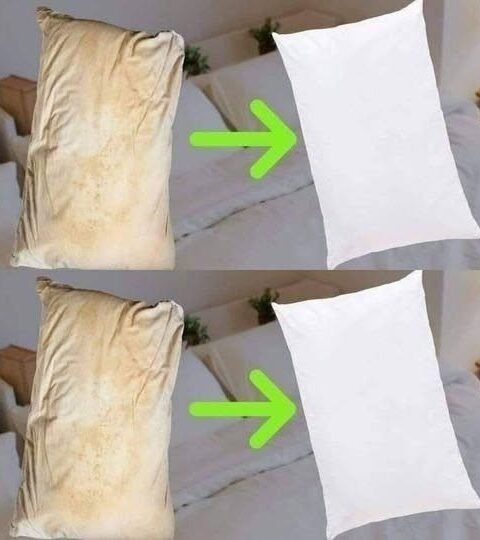
For yellow or heavily soiled areas, gently apply a small amount of liquid laundry detergent to the stains. Let it sit for about 10 to 15 minutes.
For stubborn discoloration, use an oxygen-based whitening product according to its package instructions. Avoid chlorine bleach unless the pillow manufacturer specifically says it is safe, as it can weaken or damage some fabrics and fillings.
Step 3: Wash the Pillows
Place two pillows in the washing machine at the same time if possible. Washing them in pairs helps keep the machine balanced.
Use warm water and a gentle or normal cycle, depending on the care label. Add your usual amount of mild detergent. For an extra-fresh wash, you can add about half a cup of baking soda to the wash.
Do not use too much detergent because leftover soap can remain inside the pillow and make it difficult to rinse completely.
Step 4: Rinse Thoroughly
Run an additional rinse cycle if your washing machine has that option. This helps remove detergent and dirt trapped inside the pillow.
You can use white vinegar in the fabric-softener compartment for freshness, but never mix vinegar with chlorine bleach. If you have used any bleach product, follow its instructions and rinse thoroughly.
Step 5: Dry the Pillows Completely
Drying is one of the most important steps. A damp pillow can develop a musty smell and may encourage mold or mildew.
For pillows that are dryer-safe, tumble-dry them according to the care label. Use a low or medium heat setting when appropriate, and pause occasionally to fluff the pillows.
Make sure the inside is completely dry before putting the pillowcase back on. If you prefer air-drying, place the pillows somewhere warm and well-ventilated and turn them regularly so that both sides dry properly.
Step 6: Keep Your Pillows Fresh
Use a clean pillowcase and a washable pillow protector to reduce the amount of sweat, oil, dust, and dirt that reaches the pillow. Wash pillowcases regularly and wash the pillows according to their care instructions.
If a pillow remains yellow, smells bad after thorough washing and drying, or has visible mold or mildew that cannot be removed, replacing it may be the better option.
A properly washed and completely dried pillow can look brighter, smell fresher, and feel much cleaner without using excessive amounts of detergent or harsh chemicals.