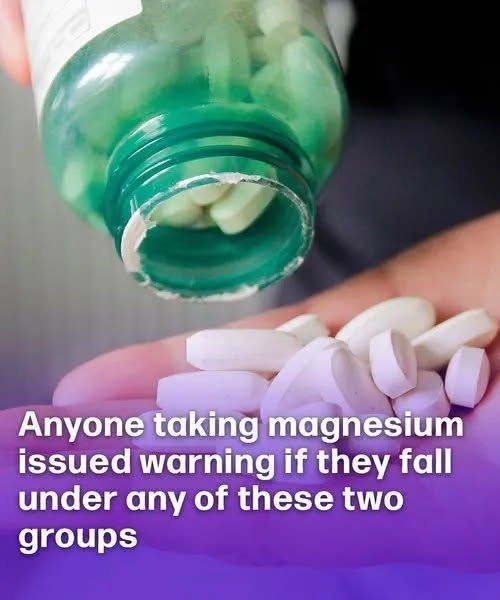
The headline “Health Experts Issue New Warning About Magnesium Supplements — Especially for These Two High-Risk Groups” has a legitimate safety point, but the wording is more dramatic than the evidence.
The two groups that deserve particular caution
1. People with reduced kidney function or kidney failure
Your kidneys normally remove excess magnesium through urine. When kidney function is impaired, magnesium can accumulate, and very high levels can cause low blood pressure, weakness, difficulty breathing, abnormal heart rhythms, and potentially cardiac arrest. (ODS)
2. People taking medications that interact with magnesium
Magnesium supplements can interfere with absorption of certain antibiotics and oral osteoporosis medicines such as bisphosphonates. Some diuretics and long-term proton-pump inhibitors can also alter magnesium levels. A pharmacist can advise on whether doses need to be separated. (ODS)
How much is too much?
For healthy adults, the U.S. NIH sets an upper limit of 350 mg/day of magnesium from supplements and medications. This limit doesn’t include magnesium naturally present in food. Higher amounts may sometimes be prescribed medically, but that should be done under professional supervision. (ODS)
Too much supplemental magnesium commonly causes diarrhea, nausea and abdominal cramping. Extremely high amounts can become dangerous. (ODS)
Food is different
Magnesium from foods such as nuts, seeds, beans, whole grains and leafy green vegetables is generally safe for healthy people because functioning kidneys can eliminate excess magnesium. The concern is mainly with high-dose supplements or magnesium-containing medicines, particularly in people whose kidneys cannot clear magnesium properly. (ODS)
Bottom line: Magnesium isn’t something everyone needs to avoid. The real warning is don’t start high-dose magnesium supplements without considering kidney function and medication interactions. If you have kidney disease or take several medicines, check with your doctor or pharmacist first.