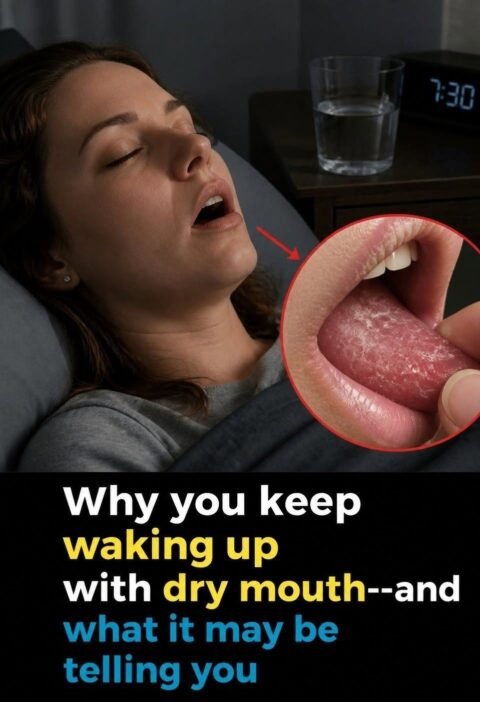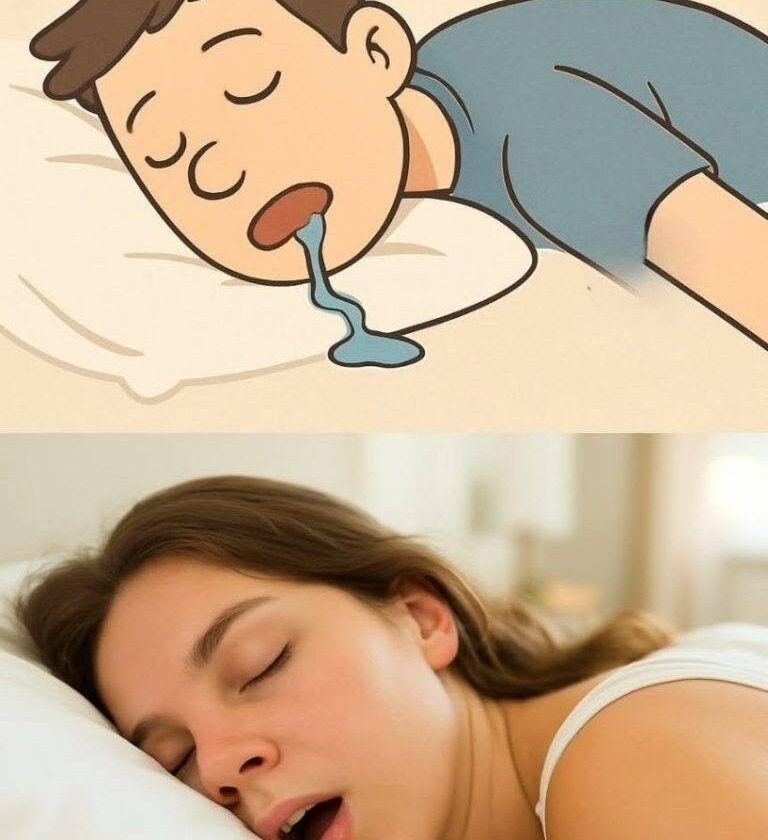
Drooling during sleep is common and often harmless, but frequent or suddenly increased drooling can sometimes be associated with an underlying problem. The headline “6 health conditions” shouldn’t be taken to mean that drooling automatically indicates disease.
6 possible reasons or conditions
- Nasal congestion or mouth breathing
Colds, allergies, sinus problems, or a blocked nose can cause you to breathe through your mouth while sleeping, making saliva more likely to escape. - Obstructive sleep apnea
Snoring, pauses in breathing, gasping during sleep, morning headaches, and excessive daytime sleepiness can occur with sleep apnea. Mouth breathing and drooling may accompany it. - Acid reflux (GERD)
Reflux can sometimes trigger increased saliva production, known as water brash, which may contribute to nighttime drooling. - Difficulty swallowing
Conditions affecting swallowing can cause saliva to accumulate in the mouth rather than being swallowed normally. - Certain neurological conditions
Some disorders that affect muscle control or swallowing can lead to excessive drooling. This doesn’t mean that ordinary nighttime drooling is evidence of a neurological disease. - Medications or increased saliva production
Some medicines can affect saliva production or swallowing and may contribute to drooling.
When should you get checked?
Talk to a healthcare professional if drooling is new, persistent, getting worse, or accompanied by difficulty swallowing, choking, unexplained weight loss, voice changes, or significant daytime sleepiness.
🚨 Seek emergency care if drooling begins suddenly together with facial drooping, difficulty speaking, weakness/numbness on one side, severe difficulty swallowing, or breathing problems, because these can be signs of a stroke or another emergency.
Bottom line: Occasional drooling while sleeping is usually not a cause for concern. Frequent drooling is more useful as a symptom to investigate alongside other symptoms rather than as a diagnosis by itself.