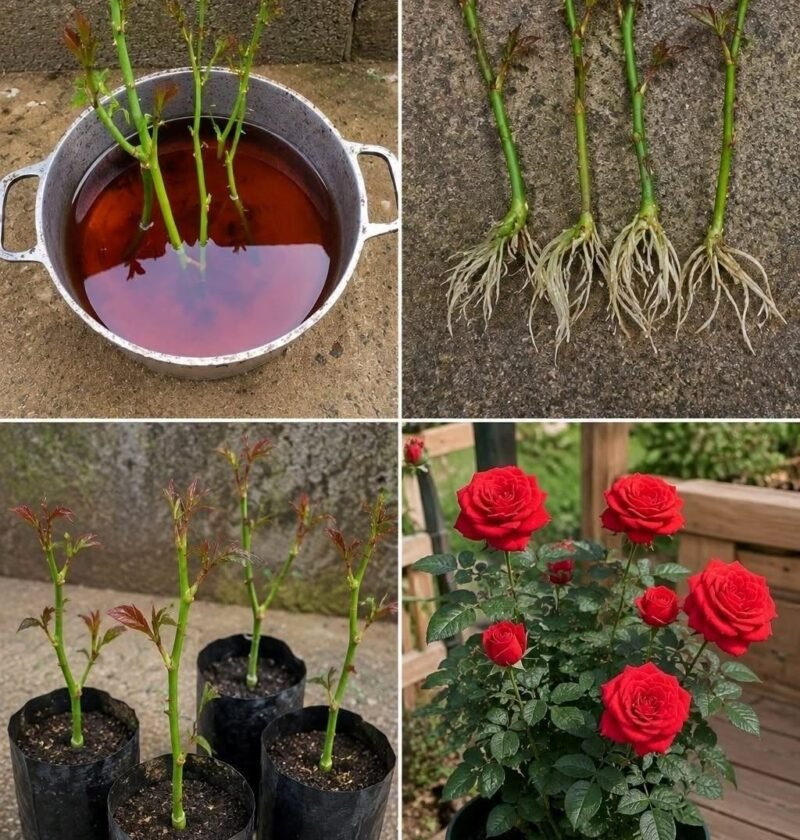
🌹 Grow New Rose Plants From Cuttings: An Easy Method
Yes, you can propagate roses from cuttings at home. The key is moisture, humidity, clean tools, and patience—not a miracle rooting ingredient.
What you need
- A healthy rose stem
- Clean, sharp pruning shears
- Small pot with drainage holes
- Well-draining propagation mix, such as perlite mixed with potting soil
- Water
- Optional: commercial rooting hormone
Step-by-step
- Choose a healthy stem
Select a disease-free stem from this season’s growth, ideally about 15–20 cm (6–8 inches) long. - Make the cutting
Cut just below a leaf node. Remove the flowers and most of the lower leaves, leaving a couple of leaves near the top. - Prepare the pot
Fill a clean container with a moist, well-draining propagation medium. Avoid ordinary garden soil because it can stay too wet and may contain pathogens. - Use rooting hormone if desired
Dip the lower end lightly in a commercial rooting hormone according to its label. It’s optional, but it can improve rooting success for some cuttings. - Plant it
Insert the lower portion of the stem into the moist medium, making sure at least one or two nodes are beneath the surface. Firm the medium gently around it. - Create humidity
Cover the pot loosely with a clear plastic bag or use a propagation dome. Don’t let the plastic touch the leaves, and provide ventilation to reduce mold. - Give it bright, indirect light
Keep the cutting warm and out of harsh direct midday sunlight. - Keep the medium slightly moist
Don’t saturate it. Water when necessary to maintain consistent moisture.
🌱 How long does it take?
Rooting can take several weeks or longer, depending on the rose variety and growing conditions. New leaf growth doesn’t always prove that roots have formed, so don’t pull on the cutting to check.
Once a good root system has developed, gradually acclimate the young plant to normal outdoor conditions and transplant it carefully.
⚠️ A couple of important points
Not every rose roots equally well from cuttings. Patented or trademarked roses may also have restrictions on propagation, particularly for commercial purposes, so check the plant’s labeling before propagating.
And viral tricks involving potatoes, honey, aloe vera, cinnamon, or sugar aren’t necessary for successful propagation. Some may be harmless, but they aren’t substitutes for proper rooting conditions.
Bottom line: A healthy cutting + clean propagation medium + consistent moisture + high humidity + bright indirect light is the reliable approach. 🌹