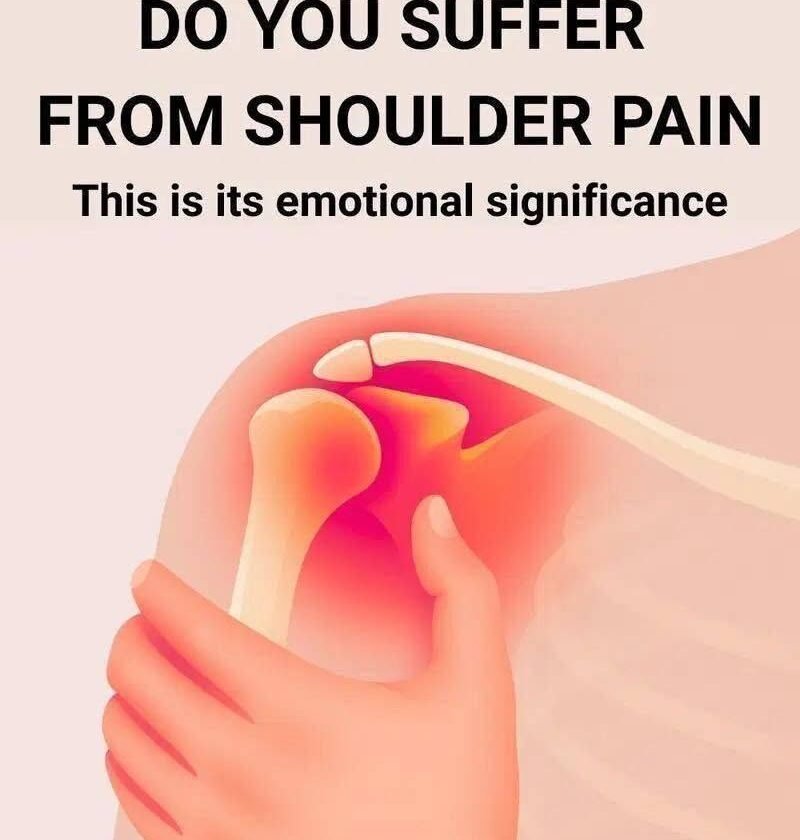
If you’re referring to the viral idea that shoulder pain has a specific emotional meaning, treat it as a wellness concept—not a medical diagnosis.
There is no reliable scientific evidence that pain in a particular shoulder corresponds to a particular emotion, such as carrying burdens, unresolved anger, or difficulty letting go.
What shoulder pain can actually be related to includes:
Muscle or tendon strain
Rotator cuff problems
Bursitis or inflammation
Frozen shoulder
Arthritis
Neck problems or a pinched nerve
An injury or repetitive activity
Stress and anxiety can contribute to muscle tension and can make pain feel worse, so emotional wellbeing can affect shoulder pain without the pain having a fixed “emotional message.”
🚨 Don’t assume it’s emotional
Seek urgent medical attention for sudden shoulder pain accompanied by chest pressure, shortness of breath, sweating, nausea, dizziness, or pain spreading to the arm, jaw, or back, because these can be symptoms of a heart attack.
For persistent or worsening shoulder pain, especially after an injury or when you have weakness or significant loss of movement, get it medically evaluated.