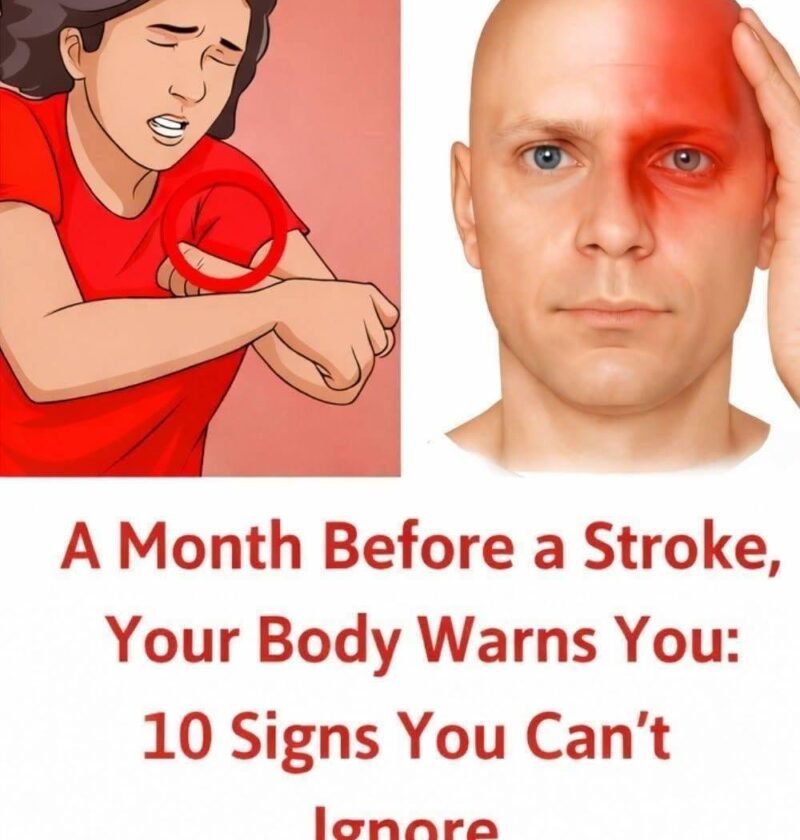
A Month Before a Stroke, Your Body May Warn You: 10 Signs to Know
There is no reliable set of 10 symptoms that can predict a stroke exactly one month in advance. However, some people experience a transient ischemic attack (TIA), sometimes called a “warning stroke,” before a major stroke. TIA symptoms can appear suddenly and may disappear within minutes or hours, but they still require urgent medical evaluation. (stroke.org)
10 Warning Signs You Should Never Ignore
- Sudden weakness or numbness
Especially on one side of the face, arm, or leg. - Sudden facial drooping
One side of the face may feel weak or look uneven when smiling. - Sudden speech problems
Slurred speech, difficulty finding words, or trouble understanding others. - Sudden vision changes
Blurred, double, or lost vision in one or both eyes. - Sudden dizziness or loss of balance
Unexpected difficulty walking or coordinating movements. - Sudden confusion
Trouble understanding what is happening or following a conversation. - Sudden severe headache
A severe headache with no known cause can be a stroke warning sign. - Sudden difficulty swallowing
New swallowing problems can occur with some neurological events. - Sudden loss of coordination
Difficulty controlling an arm, leg, or other movements should be taken seriously. - Brief stroke-like episodes that disappear
Don’t assume you’re safe just because symptoms went away. A TIA can be a warning of a future stroke. (stroke.org)
Remember B.E. F.A.S.T.
B — Balance: sudden loss of balance or coordination
E — Eyes: sudden vision changes
F — Face: facial drooping
A — Arms: sudden weakness or numbness
S — Speech: difficulty speaking or understanding
T — Time: call emergency services immediately
Don’t Wait for Symptoms to Return
If any stroke-like symptom appears suddenly—even if it disappears after a few minutes—seek emergency medical care immediately. You cannot reliably tell at home whether an episode was a TIA or an actual stroke. (stroke.org)
You can reduce stroke risk by controlling blood pressure, managing diabetes and cholesterol, avoiding tobacco, staying physically active, and taking prescribed medicines as directed. (stroke.org)
Bottom line: A stroke does not necessarily give a month-long warning. The most important warning is a sudden neurological change—especially weakness, speech difficulty, vision problems, facial drooping, or loss of balance. Acting quickly can save brain function and lives.